
Showing posts with label finger. Show all posts
Showing posts with label finger. Show all posts
Tuesday, October 20, 2015
Thursday, August 20, 2015
MasterCard announces two biometrics pilots
MasterCard puts faces and fingers under microscope (Mobile World Live)
MasterCard and First Tech Federal Credit Union, a US financial institution, will pilot the authentication of payments using facial and fingerprint recognition, in what they claim is a first for the country.
Separately, MasterCard is running another biometrics trial with International Card Services (ICS), the leading credit card provider in the Netherlands.

Monday, January 26, 2015
That explains things a bit
It's Apple's fault that the Nexus 6 doesn't have a fingerprint sensor (The Verge)
Former Motorola CEO Dennis Woodside has confessed that the dimple at the back of the Nexus 6 was originally intended to play host to a fingerprint sensor. Back in 2011, Motorola was a pioneer in bringing fingerprint recognition to its Atrix 4G smartphone, however the company it used then, Authentec, was purchased by Apple a year later for a price of $356 million. Authentec were, in Woodside's judgment, the best supplier around and "the second best supplier was the only one available to everyone else in the industry and they weren’t there yet."
Thursday, November 6, 2014
Voice biometrics and "the right to remain silent"
Passcode vs. Touch ID: A Legal Analysis (9TO5MAC)
I'm no criminal or constitutional lawyer, but it seems plausible that while a criminal suspect can be legally compelled to give over their fingerprint, the "right to remain silent" remains.
Commonwealth v. Baust probably isn't the last word on all biometric modalities that could prove useful in criminal investigations.
With the suspect in handcuffs, the agent swipes the student’s finger across the phone to access his call history and messages. Once the FBI swipes the suspect’s finger and bypasses the biometric security, the phone asks for the student’s passcode. The FBI agent asks for his password but the student refuses to speak. How can the FBI agent access the phone? Whereas a fictional Federal Agent like Jack Bauer would simply pull out his gun, jam it in the suspect’s mouth and scream, “WHERE IS THE BOMB?”, in our example, the FBI agent would hit the proverbial brick wall.This is where a gray area might still exist for hardware protected with voice biometrics.
I'm no criminal or constitutional lawyer, but it seems plausible that while a criminal suspect can be legally compelled to give over their fingerprint, the "right to remain silent" remains.
Commonwealth v. Baust probably isn't the last word on all biometric modalities that could prove useful in criminal investigations.
Tuesday, September 16, 2014
Biometric security: giving cyber criminals the finger (Finextra)
If biometric systems prove to be as effective at preventing fraud as Barclays promises, finger vein scanners are likely to be a big step in the evolution of digital banking security. Our recent research reveals that 79% of Brits are eager to ditch their passwords in favour of biometric security measures like finger vein technology.
Friday, September 5, 2014
The summer of finger veins continues
Barclays and Hitachi unveil biometric security vein scanner (V3 co uk)
Barclays and Hitachi have announced a biometric reader, which scans the unique vein patterns in a finger as part of an effort to fight fraud with a more secure take on fingerprint scanning.
The Barclays Biometric Reader consists of a SIM card that holds the unique vein structure information of a single user, and a small infra-red scanner. By using Hitachi's VeinID technology the reader captures the image of the vein pattern in a user's finger, which, like a fingerprint, is unique to individuals.
Thursday, August 21, 2014
Biometric voter verification in Brazil
Biometric voting machine to be used by 21.6 million Brazilians (Agência Brasil)
Over 20 million voters—15% of the population to take part in the 2014 elections—are estimated to cast their ballot by means of a voting machine with biometric identification, announced the Superior Electoral Court (“TSE”) on Wednesday (Aug 20). The technology can be found in 762 municipalities, among which 15 state capitals. The machines use the electors' fingerprints to recognize their identity.
Australian bank integrating mobile biometrics
 St George adds fingerprinting as Australian banks trial biometrics (Sydney Morning Herald)
St George's TouchID will be made available for the iPhone 5S as soon as iOS8 is released, currently expected in September. The service will be available on the Galaxy 5 later in the year.
Wednesday, August 13, 2014
Biometrics in schools
School Cafeterias Trading Lunch Money For Fingerprint Scans (CBS Chicago, IL)
More and more schools across the country are opting for a pay-by-fingerprint system in the cafeteria to cut down on theft and speed up the lunch line.
Friday, August 8, 2014
The summer of finger veins continues
Biometric ATM technology proves to be a hit in Eastern Europe (Companies and Markets)
From Hitachi:
Finger vein authentication uses leading-edge light transmission technology developed by Hitachi to undergo pattern-matching and authentication. Near-infrared light is transmitted through the finger and partially absorbed by hemoglobin in the veins to capture a unique finger vein pattern profile, which is then matched with a pre-registered profile to verify individual identity.
Polish bank BPS was the first in Europe to install biometric ATM technology. The technology, developed by Hitachi, allows a user to gain access to their account without a card or pin number. It is an example of so-called "finger vein" biometrics, which involves recognising a unique pattern of micro-veins beneath the surface that is then referenced with a pre-registered profile.Finger veins sure have been a hot topic in biometrics this summer.
From Hitachi:
Finger vein authentication uses leading-edge light transmission technology developed by Hitachi to undergo pattern-matching and authentication. Near-infrared light is transmitted through the finger and partially absorbed by hemoglobin in the veins to capture a unique finger vein pattern profile, which is then matched with a pre-registered profile to verify individual identity.
 |
| Image source: Hitachi |
Wednesday, August 6, 2014
Fujisoft and mofiria team up to deploy pattern-recognition based on finger veins
Partnership Focuses On Vein-Recognition Biometrics (Business Solutions)
In an interview with Find Biometrics, mofiria CEO Satoshi Amagai and Jintaro Nozawa, Fujisoft explained that, because of its accuracy and reliability, FVA technology is particularly valuable for industries that require high-security standards such as government, finance, critical infrastructure, medical, cloud computing, and education. Mofira's patented device layout can be easily incorporated into a broad range of products and services including: gateway security systems, financial transaction devices, or mobile devices. For example, mofiria’s FVA solution has been embedded in ATM terminals in China for Banks that wish to differentiate themselves with more secure customer services. The growing demand for transaction safety and security will lead to increased adoption of biometric authentication technology in the banking industry.
Oman: Bank Muscat to use biometrics for customer ID
 Bank Muscat launches biometric customer ID system (Hispanic News)
To authenticate banking transactions, the national identification card is required to be inserted in the biometric machine and customers have to validate their identity by scanning their finger print on the machine.
Wednesday, June 4, 2014
Using biometrics to prevent fraud in assistance to Malawian farmers
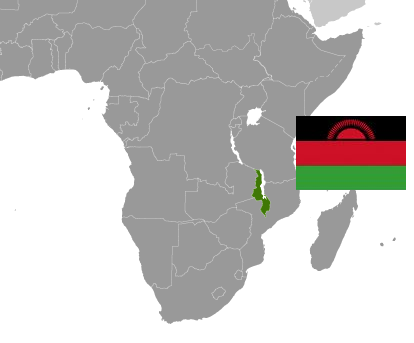 Malawi to move from coupon to biometric system in fertiliser subsidy (Nyasa Times)
...[I]n the next agricultural season, government will introduce a finger print system that will only give opportunity to the targeted beneficiary to access the cheap farm inputs.
Tuesday, January 21, 2014
Biometrics for government accoutability
Fingerprinting to end honeymoon for govt staff (Arab News)
Government employees may soon have to mark their attendance through biometrics, which may rob them of the luxury of coming late or even bunking work.
The proposal to have biometric attendance marking in all public departments was mooted by several monitoring agencies including the National Anti-Corruption Commission (Nazaha). The move is aimed at ensuring strict and timely attendance of government employees in various sectors.
Monday, January 20, 2014
Samsung to introduce mobile fingerprint tech
Samsung bets on fingerprint tech for Galaxy S5 (The Korea Herald)
After California-based Apple spearheaded fingerprint sensors last year, Samsung Electronics, the world’s largest smartphone maker, is poised to feature the sensors in its upcoming smartphone, the Galaxy S5.Iris will have to wait.
Tuesday, October 22, 2013
Recent M&A a sign of biometrics' importance to electronics industry
Recent Synaptics (SYNA) Biometrics Acquisition Boosts Sector (Investor Ideas)
Alan Goode, Managing Director of GoodeIntelligence.com said of the acquisition - "The acquisition of Validity Sensors, by Synaptics., is another sign of how important biometrics is becoming to consumer technologies. I believe this is a good match between Synaptics, who has a strong track record of developing touch-based consumer solutions, and one of the remaining independent mobile biometric sensor manufacturers. This is about giving consumer electronics products better, more convenient, security and opens up fingerprint-based biometrics to other consumer devices. We expect that additional biometric modalities, including voice, facial, eye and behavioral will be quickly integrated into other electronic devices and cloud-based services.”
Friday, July 19, 2013
Mississippi: Fingerprint verification for subsidized services, finally
Mississippi implements finger scan system for daycare (The Commercial Appeal - Memphis, TN)
We first commented on this deployment in September of last year in Biometric deployment winners and losers. Follow the links for great examples of arguments made in opposition to tightening up ID management.
More here.
Not only does a fingerprint biometric raise the burden of proof that subsidized services are actually being provided, it makes it harder for unauthorized individuals to remove a child from a child care facility.
Under the system being implemented by the state Department of Human Services, parents must use a finger scanner to sign their children in and out. Proponents say it will save money and cause parents to visit preschools more often, but opponents argue the system is intrusive and creates technical headaches.You have to read between the lines, but this is at least partly a ghost-busting mission within government-subsidized child care.
About 18,000 children will be affected by the move.
We first commented on this deployment in September of last year in Biometric deployment winners and losers. Follow the links for great examples of arguments made in opposition to tightening up ID management.
More here.
Not only does a fingerprint biometric raise the burden of proof that subsidized services are actually being provided, it makes it harder for unauthorized individuals to remove a child from a child care facility.
Wednesday, July 17, 2013
Malaysia: Biometrics may replace inky finger
No more indelible ink? (Astro Awani)
The government is prepared to consider the suggestion for the scrapping of the indelible ink and changing to the biometric system for the general election.
Thursday, June 13, 2013
Seeing a lot more about finger veins lately...
Poland's Getin Bank deploys Hitachi finger vein biometric tech in branches
Nowadays, biometrics is considered to be the best method of authentication in the banking sector with a wide range of applications, including at ATMs, branches and internet banking payments. "Within the framework of Getin Up project we want to offer our customers the package of technical innovations that will facilitate them day-by-day using of banking services. Our long-term objective is to implement biometrics in all bank branches." - said Karol Karolkiewicz, member of the Management Board of Getin Noble Bank.
Biometric technology is used to authenticate a person based on unique human physical or behavioural characteristics such as iris, fingerprint, voice or finger vein patterns. Getin Bank chose finger vein biometrics based on it being safe and secure via the use of the unique structure of blood vessels inside fingers.
Subscribe to:
Posts (Atom)

