
Showing posts with label UID. Show all posts
Showing posts with label UID. Show all posts
Monday, October 5, 2015
Tuesday, June 30, 2015
Not a bug, but a feature
Massive errors mar Aadhaar enrolment (Times of India)
Odisha is a state in eastern India. The wiki has its population at 43.73 million as of 2014.
1 lakh = 100,000
1 crore = 10,000,000
All numbers not quoted from the article are in more familiar units.
The article goes on to say a lot about the numbers. 31,700,000 out of 38,400,000 people (82%) of the eligible population have been registered successfully.
The 4 million rejected applications are divided as follows.
2 million were rejected because they were submitted by operators who have been barred from submitting applications. UID works by outsourcing enrollment to private operators who are then paid by the government for accepted applications. Operators who have submitted too many error-riddled or fraudulent applications have been banned from the market.
1 million have been rejected for being duplicate applications, as is proper.
That leaves 1 million true "errors," or failed enrollments that are potentially valid and are described as those submitted on behalf of "very old people and children (between five to 10 years), whose finger prints and iris scans were not registered properly." Now, it may turn out that some of these failed enrollments are duplicate applications as well and it will probably turn out that many (if not most) of these people can be enrolled on a second pass where extra care is taken during the enrollment process. Nevertheless describing 1 million failed enrollments out of 32.7 million presumably legitimate applications as "massive errors" seems uncharitable.
Also, UID contains a "Biometric Exception Clause" which allows for creating UID numbers for people whose biometrics cannot be enrolled. As of May 2015, across India, around 618,000 (0.07%) of UID numbers have been issued with biometric exceptions.
The enrolment process for Aadhaar in Odisha is dogged by massive rejection of data due to errors. According to the directorate of census operations here, enrolled biometric data of 40 lakh people stand rejected by the Unique Identification Authority of India (UIDAI), the Aadhaar body, as on June 15.Some facts:
Odisha is a state in eastern India. The wiki has its population at 43.73 million as of 2014.
1 lakh = 100,000
1 crore = 10,000,000
All numbers not quoted from the article are in more familiar units.
The article goes on to say a lot about the numbers. 31,700,000 out of 38,400,000 people (82%) of the eligible population have been registered successfully.
The 4 million rejected applications are divided as follows.
2 million were rejected because they were submitted by operators who have been barred from submitting applications. UID works by outsourcing enrollment to private operators who are then paid by the government for accepted applications. Operators who have submitted too many error-riddled or fraudulent applications have been banned from the market.
1 million have been rejected for being duplicate applications, as is proper.
That leaves 1 million true "errors," or failed enrollments that are potentially valid and are described as those submitted on behalf of "very old people and children (between five to 10 years), whose finger prints and iris scans were not registered properly." Now, it may turn out that some of these failed enrollments are duplicate applications as well and it will probably turn out that many (if not most) of these people can be enrolled on a second pass where extra care is taken during the enrollment process. Nevertheless describing 1 million failed enrollments out of 32.7 million presumably legitimate applications as "massive errors" seems uncharitable.
Also, UID contains a "Biometric Exception Clause" which allows for creating UID numbers for people whose biometrics cannot be enrolled. As of May 2015, across India, around 618,000 (0.07%) of UID numbers have been issued with biometric exceptions.

Tuesday, May 19, 2015
India: Biometric UID is good politics
For Modi government, UID the wild card that came good (Economic Times)
According to the Economic Survey, Aadhaar card enrolments were increasing at a rate of 2 crore per month. The government had seeded over 10 crore bank accounts with registered Aadhaar numbers by December 2014.1 crore = 10 million
Friday, May 8, 2015
India UID: Interesting de-duplication and exception stats
Over 9 crore Aadhaar enrolments rejected by UIDAI (Zee News)
Out of 823.3 million enrollments, 97.3 million (Approx. 12%) have been rejected for reasons of either quality or duplication.
This may seem to be high to some, or low to others. In the big picture, there is (or should be!) a cost-benefit analysis at the beginning of the project that gets at the expense of the process vs. the infallibility of the process. On the first pass, it might make sense to get the highest proportion of good enrollments with the most convenient process, then to engage in a more expensive enrollment process applied only to more difficult enrollments.
It's also important to note that the 97.3 million rejected enrollments contain both duplicate applications, which must be rejected and other applications where clerical error, fraud, or un-enrollable biometrics are the reason for rejection.
Another interesting statistic in the article is that only about 618,000 UID numbers have been issued under the "Biometric Exception Clause" which allows for creating UID numbers for people whose biometrics cannot be enrolled. That comes out to around 0.07%.
What that means is that (depending on the number of people waiting for a biometric exception) using a data set approaching a billion individuals, at least 99.3% of the population of India is biometrically enrollable within the existing UID enrollment process.
Note: The article uses the Indian numbering units crore and lakh.
1 crore = 10,000,000
1 lakh = 100,000
See also: UID applications without biometrics highly likely fraudulent
Out of 823.3 million enrollments, 97.3 million (Approx. 12%) have been rejected for reasons of either quality or duplication.
This may seem to be high to some, or low to others. In the big picture, there is (or should be!) a cost-benefit analysis at the beginning of the project that gets at the expense of the process vs. the infallibility of the process. On the first pass, it might make sense to get the highest proportion of good enrollments with the most convenient process, then to engage in a more expensive enrollment process applied only to more difficult enrollments.
It's also important to note that the 97.3 million rejected enrollments contain both duplicate applications, which must be rejected and other applications where clerical error, fraud, or un-enrollable biometrics are the reason for rejection.
Another interesting statistic in the article is that only about 618,000 UID numbers have been issued under the "Biometric Exception Clause" which allows for creating UID numbers for people whose biometrics cannot be enrolled. That comes out to around 0.07%.
What that means is that (depending on the number of people waiting for a biometric exception) using a data set approaching a billion individuals, at least 99.3% of the population of India is biometrically enrollable within the existing UID enrollment process.
Note: The article uses the Indian numbering units crore and lakh.
1 crore = 10,000,000
1 lakh = 100,000
See also: UID applications without biometrics highly likely fraudulent
Tuesday, April 28, 2015
Biometrics a factor in World Bank's optimism on India
While India’s Economy has Turned the Corner, Wider Reforms are Needed to Boost Economic Growth (World Bank)
The report points out that India’s government has begun to implement reforms to unlock the country’s investment potential - to improve the business environment; liberalize FDI; boost both public and private investment in infrastructure; quickly resolve corporate disputes; simplify taxation, and lower corporate taxes. States are set to receive more resources and spending power, and the government has reiterated its resolve to implement the GST by April, 2016, a move that is widely expected to meaningfully increase India’s tax to GDP ratio. New models of delivering benefits through direct transfers to bank accounts, together with the biometric identification of beneficiaries, are expected to reduce leakages.
Monday, April 27, 2015
India: UID milestone
Aadhaar world’s largest biometric ID system (Times of India)
We haven't been spending as much time on issues of economic development as we have at other times in the past, but India's major ID initiatives are creating a lot of opportunities to lift millions out of poverty.
The Aadhaar card has emerged as probably the world's largest biometric identification programmes in the world with the Unique Identification Authority of India (UIDAI) issuing nearly 82 crore cards.1 crore = 10,000,000
We haven't been spending as much time on issues of economic development as we have at other times in the past, but India's major ID initiatives are creating a lot of opportunities to lift millions out of poverty.
Thursday, February 12, 2015
India: What happens with lost UID numbers?
UIDAI devises a method to retrieve lost Aadhaar numbers (Business Standard)
A government official said as a person can only enrol for Aadhaar once, there needed to be a mechanism to retrace the number in case the person has misplaced all possible links to it.
“Enrolling again is not an option, as the system automatically rejects biometric details that have been registered once,” said the official.
Under the new method, a person can put in the biometrics and the system will keep prompting for more demographic details till the back-end server zeros down to 10 possible matches.
During the entire process, none of the details of the Aadhaar holders will be shown to the person or the operator till the time an exact match has been found.
This has been done keeping in mind the design of the Aadhaar project, where the system doesn’t reveal any information about the resident and only tries to authenticate the identity replying with a yes or no.
Monday, January 12, 2015
India: News from the UID hackathon
Codes fly thick and fast in first Aadhaar Hackathon (Economic Times)
A slew of initiatives, including financial support to Aadhaar-based companies, were announced at country's first hackathon, dedicated to innovating on the Aadhaar platform. The 24-hour marathon coding competition, conducted by incubator Khosla Labs and Nasscom, also announced an appstore dedicated to such applications, to be launched by the end of this month.Cool!
Monday, December 1, 2014
India linking UID to voter rolls
India: EC to check bogus voting, link Aadhaar with electoral rolls (Hindustan Times)
“We keep getting complaints of bogus and duplicate votes. One of the best ways to ensure that a person votes only once in the country is to link electoral rolls with Aadhaar numbers. It will be a very tedious and time-consuming exercise and we can start it only when elections are over,” Delhi’s chief electoral officer Vijay Dev said.
“We will organise special camps for people to first enrol for Aadhaar and then for the electoral rolls, especially in areas where the enrolment for both Aadhaar and voter card is extremely low. We will tie up with the district administration for this,” Dev said.
Former chief minister and Aam Aadmi Party national convenor Arvind Kejriwal had complained to the CEO that fake votes were allegedly being cast in different constituencies. The electoral office also stumbled upon some names in the electoral rolls, pointing towards a bigger racket.
Thursday, October 23, 2014
India: Critics coming around on UID?
Home Ministry praises the Aadhaar project (Economic Times)
Once a strong critic of the Aadhaar project, the Union home ministry has now effusively praised the project in a letter to all states, saying Aadhaar's biometric identification process eliminates "the threat of any fraud or bogus activity."
Thursday, October 9, 2014
More on India's public employees time-and-attendance portal
Big Brother Modi is watching bureaucrats (Reuters)
Meet the man who built the awesome online attendance system for India’s government officials (Quartz India)
"This is Big Brother stuff but very effective. It's not just the central government. The state governments are trying to emulate this."
The Prime Minister's Office will also take part in the scheme, said Dash, although it was not clear whether Modi would be enrolled.
Project mastermind Sharma, who holds the rank of secretary at the government's Department of Electronics and Information Technology, could not immediately be reached for comment. The Biometric Attendance System showed he had signed in at work at 13:55:16 p.m. on Thursday.
 |
| Screen grab: attendance.gov.in |
Meet the man who built the awesome online attendance system for India’s government officials (Quartz India)
Now, 59-year old Sharma is building an attendance system for India’s central government employees that is inexpensive, publicly available on the internet—and potentially, a simple tool that could revolutionise governance in the country.
...
The entire system is searchable, down to the names of individual central government employees, and all the data is available for download. And with that single step—making the entire platform publicly accessible—the government has introduced a level of accountability and transparency that India’s sprawling bureaucracy is unaccustomed to.
Tuesday, September 30, 2014
Private companies to help populate TSA traveler biometric database
US airports to introduce new online biometric screening technologies (Companies and Markets)
Presumably, because the TSA system will involve people who already have a verified identity and the customer will be footing the bill, the opportunity for that type of graft won't be there.
The United States Transportation Security Administration has announced its plans to allow private companies to enrol passengers for expedited screening at airports.This reminds me of India's UID system where private companies populate government databases. India had some trouble with this arrangement partly due to the way revenues flowed. In India the government payed companies to enroll people (many without ID's) in UID. Some unscrupulous agents there were signing up vegetables and getting paid for it.
The initiative, known as PreCheck, will allow US citizens to go through an online pre-enrollment process by providing biometric information.
Presumably, because the TSA system will involve people who already have a verified identity and the customer will be footing the bill, the opportunity for that type of graft won't be there.
Tuesday, September 16, 2014
INDIA: Government May Move Aadhar Project To IT Ministry (Business Insider)
The government is looking for a new parent for the Unique Identification Authority of India (UIDAI) as it prepares to wind up the Planning Commission, which had so far been the administrative authority for the body that has been tasked with issuing chip-based, biometric photo ID cards, called Aadhar, to all Indians.
Thursday, September 11, 2014
After further review...
India's biometric ID project is back on track (PC World)
The new Indian government has indicated strong support for a controversial project to require residents to have biometric IDs in order to collect government benefits, setting a target of 1 billion enrollments by 2015.
The status of the project was in doubt when a new federal government was voted in last May, as the winning Bharatiya Janata Party had said during the election campaign that it would review the program. The new target signals the new government’s backing of the Unique Identification Authority of India (UIDAI), which was largely seen as a project of the previous government led by the Congress party.
Monday, September 8, 2014
India: UID in the news
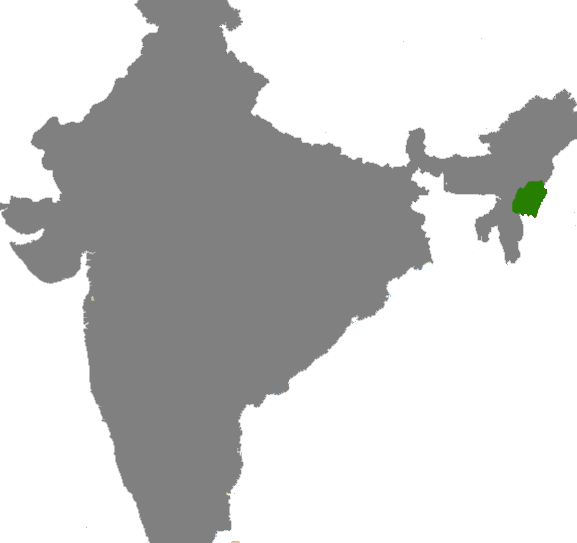 |
Manipur
|
10 lakhs = 1 million
Manipur is a state in northeastern India.
Also...
Aadhaar may be linked with Jan Dhan scheme (Hindustan Times)
The Prime Minister’s Jan Dhan Yojana, aimed at opening bank accounts for the poor, also provides for accident insurance cover of ` 1 lakh, medical insurance of `30,000 with a free debit card for those who open accounts before January 26, 2015.
This ambitious scheme of had another dimension — the possibility of the poor opening fake bank accounts to claim the benefits. To prevent that from happening, the 12-digit biometric-based unique identification number can play an important role.
Thursday, July 10, 2014
India funds UID through 2015
INDIA: Government to continue Aadhaar, provides ₹20 billion in 2014-15. The amount provided for the project for this fiscal is higher than Rs 1,550 crore provided in the previous year. 20 billion rupees is approximately 332.5 million US dollars.
Monday, July 7, 2014
From a Times of India blog...
Don’t junk Aadhaar: It will help NDA government achieve its goals
It looks like India's new government is giving UID some room to run. 100 crore is a billion people.
See also:
Aadhaar, DBT get a lifeline, Modi to retain, push UPA schemes
Prime Minister Narendra Modi has struck the right note by stepping in quickly to clear the confusion on Aadhaar cards and asking to scale up enrollments to 100 crore people over a short period. This will help the government accelerate direct benefit transfers to the poor, reduce leakages and bring down the fiscal deficit.
It looks like India's new government is giving UID some room to run. 100 crore is a billion people.
See also:
Aadhaar, DBT get a lifeline, Modi to retain, push UPA schemes
Putting to rest speculation about the fate of the UPA government’s flagship Aadhaar project and the Direct Benefits Transfer scheme, Prime Minister Narendra Modi on Saturday sought a 100-crore enrolment target under Aadhaar at the “earliest”, also asking officials to look into linking passports with its data.This is big news indeed.
Thursday, July 3, 2014
India: Latest in NPR v UID
Tug of war over Aadhaar slowing its progress (Hindustan Times)
We discussed the root philosophical differences inherent in the two ID systems here in How Much Fraud is Acceptable in NPR, UID where we observed that:
Also, the India, UID and NPR labels in the footer of this post call up a lot of in-depth analysis of what's going on with the most ambitious ID project ever conceived.
Three NDA ministries are trying to pull the UPA’s signature project, Aadhaar, in different directions, threatening to further slow down the plan to give all residents a unique identity number (UID).
We discussed the root philosophical differences inherent in the two ID systems here in How Much Fraud is Acceptable in NPR, UID where we observed that:
Bringing full citizenship rights to poor, illiterate landless Indians brings with it a near-certainty that full citizenship rights will be conferred upon some number of poor, illiterate, landless non-Indians living in India.If you're interested, I'd encourage you to read the whole thing.
Also, the India, UID and NPR labels in the footer of this post call up a lot of in-depth analysis of what's going on with the most ambitious ID project ever conceived.
Monday, June 9, 2014
India's UID project is reeling
Aadhaar enrolment procedure suffers setback, agencies halt the process (Economic Times)
It appears that the entities that collect enrollments and then charge the government for them are uniting to resist requirements that they do their job better. It's also worth recalling that some of these agencies have behaved quite badly and at least one has been willing to create enrollments for vegetables, so standards could probably be higher.
It appears that the entities that collect enrollments and then charge the government for them are uniting to resist requirements that they do their job better. It's also worth recalling that some of these agencies have behaved quite badly and at least one has been willing to create enrollments for vegetables, so standards could probably be higher.
Tuesday, March 25, 2014
Indian Supreme Court issues two-pronged UID decision
It's been a while since we've dealt with the topic of India's UID project here. This post picks up with current events. Newer readers can catch up by sifting back through the India label (also located in the post footer).
Nandan Nilekani: Supreme Court decision on Aadhaar vindicates our stand Nandan Nilekani (Economic Times)
But it's hard to see how this part of the Supreme Court decision isn't a set-back.
SC: Withdraw Orders Making Aadhaar Must for any Service (Indian Express)
Also, putting a legal wall between the welfare system and criminal justice system should increase participation.
Nandan Nilekani: Supreme Court decision on Aadhaar vindicates our stand Nandan Nilekani (Economic Times)
Earlier this month, UIDAI approached the Apex Court, challenging a Bombay High Court order which had ordered the Agency to share biometric data to help solve an ongoing criminal investigation.
But it's hard to see how this part of the Supreme Court decision isn't a set-back.
SC: Withdraw Orders Making Aadhaar Must for any Service (Indian Express)
In a clear direction that a person’s information is private and cannot be misused, the Supreme Court on Monday directed the Centre to withdraw immediately the instruction, if any, issued by it for making Aadhaar card mandatory for citizens to avail of government services...If UID is going to bring the power of biometrics to radically curtail the use of ghost recipients of direct transfers, making it mandatory could certainly help. Then again, there are other incentives that can be brought to bear. Most people would rather get a subsidy for propane directly deposited into a bank account rather than wait in line at a government store.
Also, putting a legal wall between the welfare system and criminal justice system should increase participation.
Subscribe to:
Posts (Atom)

