Alaska Airlines (ALK) is exploring using passengers’ fingerprints to replace travel documents, driver’s licenses and credit cards now needed to navigate from airport curbs to jetliner seats. If successful, it would be the first U.S. carrier to employ biometrics for boarding passes and inflight purchases and could spur wider adoption across the industry.Biometrics can add security and convenience at the same time. It looks like people are starting to recognize it.

Friday, October 10, 2014
Airline biometrics for security & convenience
Forget E-Tickets, Alaska Air Mulling E-Thumb for Boarding (Bloomberg)

Hungary: Some fans bristle at stadium palm vein scanners
Soccer-Ferencvaros fans upset by biometric 'intrusion' (Yahoo!)
Szebasztian Huber, editor of the Fradi fan website ulloi129.hu said many fans also fear that technological developments would help clubs pass Hungarian Football Association fines -- which they regard as too strict -- on to them.
Stricter stadium rules also puzzle fans because the number of violent incidents in and around Hungarian stadiums is much lower than 10 or 20 years ago, he added.
"The culture of soccer fans is different everywhere, in some countries (vein scanners) would be tolerated, while elsewhere fans could be upset," Huber said. "Launching the system highlighting its comfort functions could increase tolerance."
Thursday, October 9, 2014
Smartgates and the tightening of UK & Australia borders
AUSTRALIA: 'Foreign fighter' laws leave door open on biometric data collection (Computerworld)
UK: New biometric border controls at Stansted Airport at heart of terrorism fight (Herts and Essex Observer)
The government's second tranche of national security legislation, the Counter-Terrorism Legislation Amendment (Foreign Fighters) Bill 2014, includes measures that potentially allow a significant increase in the types of biometric data collected at Australian airports.
Provisions in the bill also extend to Australian travellers data collection practices that have previously been confined to non-citizens.
UK: New biometric border controls at Stansted Airport at heart of terrorism fight (Herts and Essex Observer)
"We are using resources and intelligence to ensure the border is as strong as we can make it."
He said the Government was also committed to tackling the problem of those travelling from the UK to the Middle East to join the IS jihadists and a new counter-terrorism Bill was set to include measure to temporarily remove the passports of those suspected of being radicalised and ready to fight abroad.
More on India's public employees time-and-attendance portal
Big Brother Modi is watching bureaucrats (Reuters)
Meet the man who built the awesome online attendance system for India’s government officials (Quartz India)
"This is Big Brother stuff but very effective. It's not just the central government. The state governments are trying to emulate this."
The Prime Minister's Office will also take part in the scheme, said Dash, although it was not clear whether Modi would be enrolled.
Project mastermind Sharma, who holds the rank of secretary at the government's Department of Electronics and Information Technology, could not immediately be reached for comment. The Biometric Attendance System showed he had signed in at work at 13:55:16 p.m. on Thursday.
 |
| Screen grab: attendance.gov.in |
Meet the man who built the awesome online attendance system for India’s government officials (Quartz India)
Now, 59-year old Sharma is building an attendance system for India’s central government employees that is inexpensive, publicly available on the internet—and potentially, a simple tool that could revolutionise governance in the country.
...
The entire system is searchable, down to the names of individual central government employees, and all the data is available for download. And with that single step—making the entire platform publicly accessible—the government has introduced a level of accountability and transparency that India’s sprawling bureaucracy is unaccustomed to.
Wednesday, October 8, 2014
ESPN does "Biometrics"
ESPN does "Biometrics" and the results leave the ten or twenty, or so, of us who believe that a heart monitor isn't a biometric device a little disappointed.
Indeed, it appears we are losing the great Biometrics vs. Biostatistics debate. Back in 2011, we made the case for distinguishing between biometrics and biostatistics as follows.
Biometric = body measure.
Biostatistic = body status, state, or condition.
Biometrics for identity management concern facts about the physical human body that don't change (or don't change much) over time.
Biostatistics, on the other hand, are useful precisely because they change, sometimes radically over short or long time-frames.
ESPN provides the latest evidence that our plea has fallen upon deaf ears in New biometric tests invade the NBA.
Also...
The headline writer's passive voice has "biometric tests"ex nihilo "invading" the NBA. Tests and monitoring, biometric or otherwise, can't assert themselves. Technology, biometric or otherwise, is about people.
Indeed, it appears we are losing the great Biometrics vs. Biostatistics debate. Back in 2011, we made the case for distinguishing between biometrics and biostatistics as follows.
Biometric = body measure.
Biostatistic = body status, state, or condition.
Biometrics for identity management concern facts about the physical human body that don't change (or don't change much) over time.
Biostatistics, on the other hand, are useful precisely because they change, sometimes radically over short or long time-frames.
ESPN provides the latest evidence that our plea has fallen upon deaf ears in New biometric tests invade the NBA.
But what might come as a surprise is how significant that explosion has been, and how far its blast radius might soon reach. The literary specter haunting sports' burgeoning Information Age is no longer Michael Lewis and Moneyball but George Orwell and 1984.It's possible that some employers have delusions tending rather to Big Brother. The article linked here, however, has nothing to do with biometrics as we discuss them here: as identity management tools.
The boom officially began during work hours. Before last season, all 30 arenas installed sets of six military-grade cameras, built by a firm called SportVU, to record the x- and y-coordinates of every person on the court at a rate of 25 times a second -- a technology originally developed for missile defense in Israel. This past spring, SportVU partnered with Catapult, an Australian company that produces wearable GPS trackers that can gauge fatigue levels during physical activity. Catapult counts a baker's dozen of NBA clients, including the exhaustion-conscious Spurs, and claims Mavericks owner Mark Cuban as both a customer and investor. To front offices, the upside of such devices is rather obvious: Players, like Formula One cars, are luxury machines that perform best if vigilantly monitored, regulated and rested.
But to follow this logic to its conclusion is to understand why the scope of this monitoring is expanding, and faster than the public knows. Teams have always intuited that on-court productivity could be undermined by off-court choices -- how a player exhausts himself after hours, for instance, or what he eats and drinks. Now the race is on to comprehensively surveil and quantify that behavior.
Also...
The headline writer's passive voice has "biometric tests"ex nihilo "invading" the NBA. Tests and monitoring, biometric or otherwise, can't assert themselves. Technology, biometric or otherwise, is about people.
Tuesday, October 7, 2014
Philippines: Biometric voter registration in shopping malls
Voters’ satellite booths open in malls (Inquirer.net)
The Commission on Elections (Comelec) has opened satellite voters’ registration booths in selected Robinsons malls in Metro Manila to encourage more people to register and have their biometrics taken for the 2016 national elections.
UAE to open biometric visa enrollment center in Sri Lanka
UAE opens its first visa issuing centre outside the country in... (Emirates 247)
The new visa centre serves 500 customers every day and uses passport authentication and biometrics such as fingerprints, eyeprints and faceprints, and medical tests conducted at 15 Sri Lankan centres accredited by U.A.E. Ministry of Health, in order to identity, and prevent entry of individuals with contagious disease.
The procedures will save costs of recruitment, quarantine and deportation and improve customer service as they are aimed at providing excellent consular services fulfilling internationally recognised standards.
India: Biometric time-and-attendance with a web portal
Indian government launches website to track attendance of government employees (Economic Times)
Also, from Business Insider:
Using UIDAI, Prime Minister Narendra Modi-led NDA government has launched a Biometric Attendance System (BAS) for government employees. Attendance.gov.in has been launched to keep a track on the attendance records of employees.This is similar to a system we designed for a customer serving an education ministry in West Africa, only much bigger.
Under the system, an organisation needs to register on the website. According to the website, "A back-end administrator will check the details of the organisation submitted and make the organisation active by assigning it a unique sub-domain which will be the first name of the website."
Also, from Business Insider:
In a bid to ensure improved work culture in central government offices, the NDA government has taken a revolutionary step. It has introduced Aadhaar-based biometric attendance systems to monitor and track the work of Central Government employees. The attendance system is now up and running; and you know the best part is that it is accessible even to general public on attendance.gov.in.
Monday, October 6, 2014
No, they won't.
Lip Movements may be Your New Password! (Indian Republic)
A new study has now found that each person moves their lips slightly differently when they talk, and this new information opens up the possibility of computers that can be unlocked with a word through lip-reading.This one is going on "the list."
IDC Comment: Biometric Identification in Financial Applications
International Data Corporation (IDC) Analyst: Banks should precede with caution (IDC)
"While improving authorization experience is attractive and will help adoption of mobile banking services, financial institutions should not just blindly commit to mass market biometric identification solutions, especially those provided by third parties via publicly-available APIs", says Andrei Charniauski, Research Manager at IDC Financial Insights.
Wednesday, October 1, 2014
Exorcising the biometric bogeyman
Shedding light on Florida’s biometric ban (Secure ID News)
For Florida State Rep. Jake Raburn (R – Valrico) one of the bill’s sponsors, it’s a privacy issue. “No one, including the federal government, should be allowed access to our students’ personally identifiable information,” Raburn said. “This legislation will protect this sensitive information and prevent its misuse.”
The Pinellas County school district, near Tampa, uses palm scanners to move kids through lunch lines. Barbara Dalesandro, a food service technology coordinator for the district, tried to convince lawmakers to reject the legislation.
“When we had cards and PIN numbers, there was constant fraud. Other students always drained the accounts. There was a significant loss of revenue in that regard,” Dalesandro said. “We’ve been using palm scanning for four years with no problems from our parents.” - See more at: http://secureidnews.com/news-item/shedding-light-on-floridas-biometric-ban/#sthash.EBTXaPnZ.dpuf
Tuesday, September 30, 2014
Samsung, fingerprint & mobile payments
Samsung Integrates Fingerprint Technology on Smartwatches (Payment Week)
Samsung Electronics has teamed up with e-commerce company PayPal and human interface solutions provider Synaptics to integrate mobile payment fingerprint-identification technology on its smartwatches.
Iris and Somaliland elections
Computer science professor aids Somaliland’s election (Notre Dame & St. Mary's Observer)
“Someone in Somaliland sent me an e-mail asking me to help with improving their voting register,” Bowyer said. “They said they wanted to use iris-recognition technology and asked us for help.”
Private companies to help populate TSA traveler biometric database
US airports to introduce new online biometric screening technologies (Companies and Markets)
Presumably, because the TSA system will involve people who already have a verified identity and the customer will be footing the bill, the opportunity for that type of graft won't be there.
The United States Transportation Security Administration has announced its plans to allow private companies to enrol passengers for expedited screening at airports.This reminds me of India's UID system where private companies populate government databases. India had some trouble with this arrangement partly due to the way revenues flowed. In India the government payed companies to enroll people (many without ID's) in UID. Some unscrupulous agents there were signing up vegetables and getting paid for it.
The initiative, known as PreCheck, will allow US citizens to go through an online pre-enrollment process by providing biometric information.
Presumably, because the TSA system will involve people who already have a verified identity and the customer will be footing the bill, the opportunity for that type of graft won't be there.
Thursday, September 25, 2014
A case for voice for mobile ID
Many reasons to use biometrics to secure mobile payments (Payments Source)
Much is being researched and written on the subjects of mobile payment security and the use of biometrics as a replacement to traditional user names and passwords. As more mobile devices that contain our identification and personal information hit the market, the securing of these devices to recognize and authenticate their rightful owners will likely determine who succeeds and those who fail.Author Mike Goldgof is the Vice President of Marketing at AGNITiO.
US: DHS sets sights on new biometric database
At Planet Biometrics...
The US Department of Homeland Security’s Office of Biometric Identity Management will receive US$20 million in extra funding to keep its existing identification system operating while a new database is developed, a senior OBIM official confirmed to Planet Biometrics at the Global Identity Summit in Tampa.
The official confirmed that the new database is required because the 20-year-old system is currently dealing with 300,000 transactions a day (hitting a database of 173 million unique identities) in comparison to 220,000 (hitting a database of 150 million unique identities) a year ago.

Tuesday, September 23, 2014
Kenya government time-and-attendance
Biometric registration of public servants kicks off (Standard Digital News)
The Transition Authority has assured public servants that the Capacity Assessment and Rationalisation of Public Service exercise under the national and county governments would not lead to retrenchment.
Speaking yesterday when the exercise kicked off in Nakuru County, TA Commissioner Simon Pkiyach said the exercise would facilitate the transformation of public service for efficient service delivery.
India government time-and-attendance
Aadhar-Based Biometric Attendance For Employees of Central Government by September End (The Indian Republic)
The biometric attendance systems for employees of the central government, based on Aadhar cards, is set to be fully functional by the end of September.
Ram Sevak Sharma, the Information Technology Secretary, has told reporters that the biometric system of attendance will be fully functional by the end of the month.
Biometrics as a key enabler of microfinance
Pakistan Microfinance landscape: Opening an account within a minute (Exress Tribune)
...[A] lot of bankable people remain unbanked in Pakistan mainly because of tedious form-filling procedures imposed in the name of know-your-customer (KYC) requirements.
But thanks to the biometric identification devices currently being installed for SIM cards across the country, the microfinance landscape in Pakistan is going to change forever, according to Tameer Microfinance Bank CEO Nadeem Hussain.
Friday, September 19, 2014
Passwords vs. biometrics (GCN)
January 17, 2012 More on the Awesomeness of Passwords
The password by itself actually is a pretty good tool. It is simple to use, easy to implement and can be reasonably strong. The problem is one of scale. For a user juggling passwords for multiple accounts and for administrators juggling many users, the system quickly becomes unwieldy, and strong security begins to break down. In addition, the steady growth in computing power erodes password security by making dictionary and brute force attacks more practical.See also:
Biometrics – the use of physical traits such as fingerprints, irises, faces or voices to identify persons – is more complex, but is becoming more practical. It offers the promise of better security based on the premise that there is only one you.
Yet it has its drawbacks...
January 17, 2012 More on the Awesomeness of Passwords
India Fingerprint Biometrics Market (2014 - 2020) (6Wresearch)
According to 6Wresearch, India’s Fingerprint Biometrics Market is projected to grow at a CAGR of 35.1% during 2014-20.Though, in overall fingerprint biometrics market, government, travel & transportation application captured lion’s share, but in the forecast period its share is likely to decline, owing to increasing penetration and adoption in other application markets such as healthcare, banking & financial, retail and commercial offices.
Thursday, September 18, 2014
Mobile face and voice combo tested by Mastercard
Mastercard voice and face recognition acheives 98% success rate (Computer Weekly)
The payment card company created a mobile app to test voice and facial recognition technologies on more than 14,000 transactions.We discussed why face and voice biometrics were likely to be strong candidates for mobile biometrics here in 2012.
Mastercard employees around the world carried out the tests on Android and iOS operating systems. The process took less than 10 seconds for most transactions.
Wednesday, September 17, 2014
Obviously
Comment: Are biometrics the future of retail payments? (Essential Retail)
The author doesn't answer his own question, but I will.
Biometrics are at least part of the future of payments. The billion dollar questions are: How? & When?
The author doesn't answer his own question, but I will.
Biometrics are at least part of the future of payments. The billion dollar questions are: How? & When?
Novel biometric modality: Brain prints
'Brain prints' the new biometric identifier (WhaTech)
The linked article doesn't make any mention of the sensor to be used to collect brain prints, much less offer a vision for how a future identification scenario might work.
This is one of those subjects that is intensely interesting from a Ph.D.'s point of view (invention) but not so much from an engineering or business perspective (innovation). Brain prints as a biometric will face significant — I dare say insurmountable — challenges in finding its way into wide use as a commercial ID management application any time soon.
We've had fingerprints for years as unique identifiers of individuals and in recent times their uniqueness has been successfully employed for access control. More recently they've been followed by voiceprints and iris scans as unique personal attributes that can be used for access to information systems. But brain waves?Let's not get ahead of ourselves. Though there is little doubt that if any behavioral biometric can be used as a reliable identifier, evidence for that uniqueness can be found in the brain and measured, brain prints as ubiquitous biometrics face every obstacle we discussed in our post, The challenges confronting any new biometric modality and then some.
The linked article doesn't make any mention of the sensor to be used to collect brain prints, much less offer a vision for how a future identification scenario might work.
This is one of those subjects that is intensely interesting from a Ph.D.'s point of view (invention) but not so much from an engineering or business perspective (innovation). Brain prints as a biometric will face significant — I dare say insurmountable — challenges in finding its way into wide use as a commercial ID management application any time soon.
More European biometric banking
NETHERLANDS: ING launches voice-recognition banking app (Computer Weekly)
Perhaps it's about time the United States gets in on the leap-frogging game. An interesting fact in this case is that a Dutch bank is implementing banking security two generations more advanced than US banks use and they're doing it with voice recognition technology developed in the United States.
Dutch banking group ING Netherlands has launched a banking application that can be navigated using voice recognition.Keeping in mind the difference between voice recognition and speech recognition, biometric ID management technologies sure seem to be gatting a lot of traction in the banking sector. This appears to be the case especially in Europe where banking security already far exceeds what you typically see in the United States as chip on card technology for bank cards has been standard in Europe for a long while now.
The firm hopes future generations of the app will use biometric voice recognition for user authentication to replace PINs.
Perhaps it's about time the United States gets in on the leap-frogging game. An interesting fact in this case is that a Dutch bank is implementing banking security two generations more advanced than US banks use and they're doing it with voice recognition technology developed in the United States.
Tuesday, September 16, 2014
FBI switches criminal ID information systems
FBI: Full Operational Capability of the Next Generation Identification System (FBI Press Release)
National Instant Criminal Background Check System (NICS) reports problem-free weekend after a week of issues (Guns.com)
The Federal Bureau of Investigation (FBI) Criminal Justice Information Services (CJIS) Division announced today the achievement of full operational capability of the Next Generation Identification (NGI) System. The FBI’s NGI System was developed to expand the Bureau’s biometric identification capabilities, ultimately replacing the FBI’s Integrated Automated Fingerprint Identification System (IAFIS) in addition to adding new services and capabilities.The transition appears not to have been completely smooth, but it also looks like normal service is being restored to those who rely upon the FBI's ID infrastrusture.
...
The IPS [Interstate Photo System] facial recognition service will provide the nation’s law enforcement community with an investigative tool that provides an image-searching capability of photographs associated with criminal identities.
National Instant Criminal Background Check System (NICS) reports problem-free weekend after a week of issues (Guns.com)
The system started experiencing problems Sept. 6, when the FBI implemented the Next Generation Identification system — a $1.2 billion biometric system that recognizes facial features, scans irises, and reads palm and fingerprints to identify criminals — to replace the single sourced Integrated Automated Fingerprint Identification System.
INDIA: Government May Move Aadhar Project To IT Ministry (Business Insider)
The government is looking for a new parent for the Unique Identification Authority of India (UIDAI) as it prepares to wind up the Planning Commission, which had so far been the administrative authority for the body that has been tasked with issuing chip-based, biometric photo ID cards, called Aadhar, to all Indians.
Biometric security: giving cyber criminals the finger (Finextra)
If biometric systems prove to be as effective at preventing fraud as Barclays promises, finger vein scanners are likely to be a big step in the evolution of digital banking security. Our recent research reveals that 79% of Brits are eager to ditch their passwords in favour of biometric security measures like finger vein technology.
Thursday, September 11, 2014
After further review...
India's biometric ID project is back on track (PC World)
The new Indian government has indicated strong support for a controversial project to require residents to have biometric IDs in order to collect government benefits, setting a target of 1 billion enrollments by 2015.
The status of the project was in doubt when a new federal government was voted in last May, as the winning Bharatiya Janata Party had said during the election campaign that it would review the program. The new target signals the new government’s backing of the Unique Identification Authority of India (UIDAI), which was largely seen as a project of the previous government led by the Congress party.
Wednesday, September 10, 2014
Mobile devices pose privacy risks and biometrics can help
Forget silly privacy worries - help biometrics firms make MILLIONS (The Register)
The other two biometric technologies mentioned by the author, face and voice recognition, would perhaps be easier to abuse by a third party. The more acute risk to individual privacy associated with mobile biometrics, however comes not from a bunch of moustache-twirling banks and biometrics companies, but from flippy birds and fuzzy bunnies, or downloaded apps accessing onboard biometric technology for no other reason than to sell on to its customers the information gleaned. But that type of privacy risk is inherent in mobile technology. With its location services, cameras, microphones, wifi, NFC and bluetooth, modern mobile devices already contain an astonishing array of sensors and communications devices waiting to be abused or used in ways consumers don't necessarily anticipate, and that's happening right now.
Biometrics didn't create this situation but they might be able to help.
Tech firms are set to experience a biometric bonanza - as long as they can persuade ordinary folk to give up worrying about their privacy.The goals of mobile device fingerprint technology are the epitome of privacy protection. Mobile fingerprint technology doesn't spy on users and, by itself, it's hard to see how it can create commercially valuable information for a third party to sell. It is put in place to make the "always on," web-connected pocket computer a more secure platform from which to perform the functions financial institutions and users seem to want.
That's the claim in a briefing note from “growth consulting firm” Frost & Sullivan, which suggested the number of smartphones equipped with biometric gubbins will soar from 43 million to 471 million by 2017.
This, according to the beancounters, means the biometric revenue from smart phones will soar from increase from $53.6m in 2313 to $396.2m in 2019, amounting to an annual growth rate of 39.6 per cent.
“Due to existing hardware capabilities across devices, most of the growth is expected from facial and voice authentication technologies,” said Frost & Sullivan ICT Global Programme Director Jean-Noël Georges.
 |
Dick Dastardly - not a banker or
biometrics executive
|
Biometrics didn't create this situation but they might be able to help.
Tuesday, September 9, 2014
The future of large scale deployments
The rise of biometric banking (The Conversation)
Although not yet commonplace, biometrics are expected to become so over the next three to five years. Currently, the biggest users are governments which have already implemented biometrics into citizen identity documents (such as passports and national ID cards) and it is estimated that by 2015 biometric citizen IDs will outnumber non-biometrics by 4:1. In 2006, the UK joined 40 other countries in introducing e-passports that use facial recognition technology to authenticate citizens.Read the whole thing.
Oman bank fingerprint biometrics
OMAN: Royal Omani Police (ROP) & Bank Muscat biometric system compatible with the national ID card
The biometric identification system available across the bank's network of 138 branches is aimed at improving efficiency and speed of transaction especially when opening new accounts.
Monday, September 8, 2014
Somaliland testing iris for electoral biometrics
 Iris register to eyedentify voting fraud in Somaliland (New Scientist)
THE eyes have it. Somaliland's election commission is trialling an iris-based biometric system that it hopes will put an end to duplicate registrations. This would make it one of the most advanced voter registration systems on the planet.
Per the CIA world factbook
In May 1991, northern clans declared an independent Republic of Somaliland that now includes the administrative regions of Awdal, Woqooyi Galbeed, Togdheer, Sanaag, and Sool. Although not recognized by any government, this entity has maintained a stable existence and continues efforts to establish a constitutional democracy, including holding municipal, parliamentary, and presidential elections.
From the Federal Times: DHS could get millions for IDENT biometrics — The Homeland Security Department will get more than $25 million for improvements to its Automated Biometric Identification System [IDENT] if a funding bill for fiscal 2015 should become law.
India: UID in the news
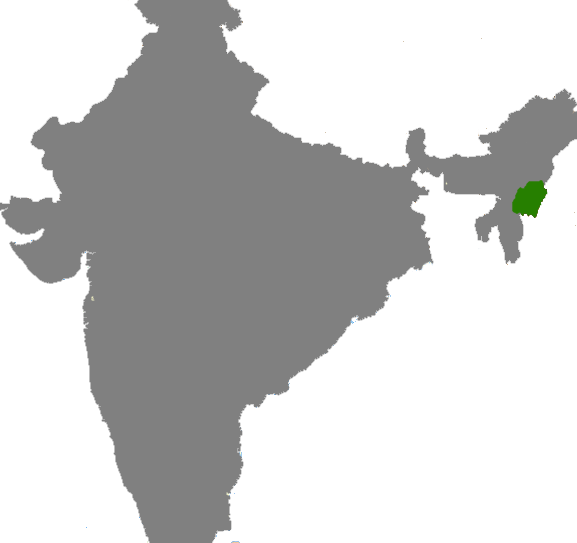 |
Manipur
|
10 lakhs = 1 million
Manipur is a state in northeastern India.
Also...
Aadhaar may be linked with Jan Dhan scheme (Hindustan Times)
The Prime Minister’s Jan Dhan Yojana, aimed at opening bank accounts for the poor, also provides for accident insurance cover of ` 1 lakh, medical insurance of `30,000 with a free debit card for those who open accounts before January 26, 2015.
This ambitious scheme of had another dimension — the possibility of the poor opening fake bank accounts to claim the benefits. To prevent that from happening, the 12-digit biometric-based unique identification number can play an important role.
Friday, September 5, 2014
Analysis: Face recognition in law enforcement
Facial recognition technology a law enforcement tool (Wicked Local North of Boston)
Police are using sophisticated software to match the faces of criminals being videotaped committing a crime and photographs stored in enormous databases. The software has paid some dividends. This year, Akron, Ohio, police detectives used a facial recognition database to identify a suspect accused of murder. Detectives obtained the suspect’s photograph. The image was run through the database, and Charles Fortson was flagged. After an interview Fortson was arrested.Concerns about the proper scope of facial recognition technology applications in law enforcement are also discussed in the above-linked article.
The summer of finger veins continues
Barclays and Hitachi unveil biometric security vein scanner (V3 co uk)
Barclays and Hitachi have announced a biometric reader, which scans the unique vein patterns in a finger as part of an effort to fight fraud with a more secure take on fingerprint scanning.
The Barclays Biometric Reader consists of a SIM card that holds the unique vein structure information of a single user, and a small infra-red scanner. By using Hitachi's VeinID technology the reader captures the image of the vein pattern in a user's finger, which, like a fingerprint, is unique to individuals.
Thursday, September 4, 2014
Intel Capital invests in iris biometrics via Delta ID Inc.
Delta ID Inc. raises $5M from Intel Capital and others to bring iris recognition to mass market (Press Release)
"We believe biometrics technology will increasingly become a part of how people interact with personal computing and mobile devices, enabling safer, more secure, and convenient user authentication," said Erik Reid, vice president of Intel's Mobile and Communications Group and general manager of its Tablet Business Unit. "Working with biometric companies such as Delta ID is a key part of Intel's initiatives to eliminate the hassle of passwords. Intel Capital's investment will help accelerate the adoption of iris recognition by the ecosystem of device manufacturers, service providers and users."
Biometrics for refugees
Turkey adopts biometrics to manage Syrian refugees (Daily Sabah)
Officials from Turkish Prime Ministry's Disaster and Emergency Management Authority (AFAD) said yesterday that they completed the biometric registration of 740,000 Syrians in the country that hosts about 1.1 million displaced Syrians. AFAD hosted a symposium yesterday that was attended by deputy governors from around the country to address the problems related to displaced Syrians.
Tuesday, September 2, 2014
Fighting corruption in East Africa
'Ghost workers': Kenya biometric register launched (Bor Globe)
Kenya has started biometrically registering all civil servants in an attempt to remove "ghost workers" from the government's payroll.
Chinese giants join mobile fingerprint payments fray
Alibaba teams up with Huawei to let Alipay Wallet users pay with just their fingerprint (TNW)
[...]Alibaba has announced a way to make its payments service Alipay even more secure on a smartphone — with the introduction of fingerprinting technology in a deal that it inked with smartphone manufacturer Huawei.
Biometric system mooted to keep bogus beneficiaries at bay (Times of India)
MYSORE: The state commission for persons with disabilities may introduce biometric system to issue ID cards/ certificates for the disabled. The move is expected to curb fake certificates and help maintain a database of disabled persons in the state.
Thursday, August 28, 2014
Biometric authentication moves beyond science fiction (Security Info Watch)
Nigeria launches MasterCard-branded eID card (Finextra)
Nigeria launches MasterCard-branded eID card (Finextra)
Wednesday, August 27, 2014
3-D Printed Bump Keys
It appears a token technology that we've relied on to secure our possessions and domiciles for centuries has been hacked by clever men with 3-D printers and rubber mallets.
These 3-D Printed Skeleton Keys Can Pick High-Security Locks in Seconds (Wired)
The article at the link also has this very informative gif a showing how a bump key works in a lock.
According to the logic employed by some critics of biometric technologies, this means locks opened using metal keys are useless now. I, for one, however, will not be contracting with any security guard services today. A fingerprint front door unlocker would be cool, though.
These 3-D Printed Skeleton Keys Can Pick High-Security Locks in Seconds (Wired)
One of the hairier unintended consequences of cheap 3-D printing is that any troublemaker can duplicate a key without setting foot in a hardware store. But clever lockpickers like Jos Weyers and Christian Holler already are taking that DIY key-making trick a step further: They can 3-D print a slice of plastic or metal that opens even high-security locks in seconds, without even seeing the original key.
The article at the link also has this very informative gif a showing how a bump key works in a lock.
 |
Source: Wired
|
According to the logic employed by some critics of biometric technologies, this means locks opened using metal keys are useless now. I, for one, however, will not be contracting with any security guard services today. A fingerprint front door unlocker would be cool, though.
Friday, August 22, 2014
Biometrics for vaccination records
Scanning babies fingerprints could save lives (Michigan State Univ.)
Each year 2.5 million children die worldwide because they do not receive life-saving vaccinations at the appropriate time.Operation ASHA has been using biometrics for tuberculosis treatment, too.
Anil Jain, Michigan State University professor, is developing a fingerprint-based recognition method to track vaccination schedules for infants and toddlers, which will increase immunization coverage and save lives.
Thursday, August 21, 2014
Biometric voter verification in Brazil
Biometric voting machine to be used by 21.6 million Brazilians (Agência Brasil)
Over 20 million voters—15% of the population to take part in the 2014 elections—are estimated to cast their ballot by means of a voting machine with biometric identification, announced the Superior Electoral Court (“TSE”) on Wednesday (Aug 20). The technology can be found in 762 municipalities, among which 15 state capitals. The machines use the electors' fingerprints to recognize their identity.
Australian bank integrating mobile biometrics
 St George adds fingerprinting as Australian banks trial biometrics (Sydney Morning Herald)
St George's TouchID will be made available for the iPhone 5S as soon as iOS8 is released, currently expected in September. The service will be available on the Galaxy 5 later in the year.
Saudi biometric market to hit USD1.5b by 2019
MENAFN.com: USD1.5 billion by 2019. This growth and will be mainly controlled by fingerprint biometrics technology, which is already being adopted in the country due to its low cost and ease in its installation and usage.
Tuesday, August 19, 2014
That's like, so 2001
MAY, 2013
Boston PD Tested Facial Recognition Software By Recording Every Face At Local Music Festivals (Daily Caller)
FEBRUARY, 2001
Welcome to the Snooper Bowl (Time)
Boston PD Tested Facial Recognition Software By Recording Every Face At Local Music Festivals (Daily Caller)
Concertgoers at last year’s annual Boston Calling music festivals weren’t just there to watch the show — they were watched themselves as test subjects for Boston police’ new facial recognition technology, which reportedly analyzed every attendee at the May and September two-day events.
Employees at IBM — the outside contractor involved in deploying the tech alongside Boston Police — planned the test of its Smart Surveillance System and Intelligent Video Analytics to execute “face capture” on “every person” at the concerts in 2013.
FEBRUARY, 2001
Welcome to the Snooper Bowl (Time)
In a move that has been both hailed and decried, the Tampa Bay police department used the occasion of Super Bowl XXXV to conduct a high-tech surveillance experiment on its unsuspecting guests. In total secrecy (but with the full cooperation of the National Football League), the faces of each of the games' 72,000 attendees were scanned and checked against a database of potential troublemakers. The news, first reported in the St. Petersburg Times, raises some urgent questions: is this the end of crime--or the end of privacy?The technology and key personnel from Graphco were acquired by SecurLinx in 2003.
The surveillance system, FaceTrac, is based on technology originally developed at the Massachusetts Institute of Technology to teach computers to recognize their users, and was installed by a Pennsylvania firm called Graphco Technologies.
Wednesday, August 13, 2014
Biometrics in schools
School Cafeterias Trading Lunch Money For Fingerprint Scans (CBS Chicago, IL)
More and more schools across the country are opting for a pay-by-fingerprint system in the cafeteria to cut down on theft and speed up the lunch line.
FBI captures long-time fugitive using facial recognition

FBI and facial recognition catch a fugitive of 14 years (FBI)
Special Agent Russ Wilson had just been assigned the job of fugitive coordinator in our Albuquerque Division—the person responsible for helping to catch the region’s bank robbers, murderers, sex offenders, and other criminals who had fled rather than face the charges against them.
“In addition to the current fugitives, I had a stack of old cases,” Wilson said, “and Stammer’s stood out.” Working with our Office of Public Affairs, a new wanted poster for Stammer was posted on FBI.gov in hopes of generating tips.
At about the same time, a special agent with the Diplomatic Security Service (DSS)—a branch of the U.S. Department of State whose mission includes protecting U.S. Embassies and maintaining the integrity of U.S. visa and passport travel documents—was testing new facial recognition software designed to uncover passport fraud. On a whim, the agent decided to use the software on FBI wanted posters. When he came upon Stammer’s poster online, a curious thing happened: Stammer’s face matched a person whose passport photo carried a different name.
Tuesday, August 12, 2014
INDIA: Cash for Poor to Dilute Power of Oligarchs (Bloomberg)
IUndian central bank Governor Raghuram Rajan urged the government to directly transfer cash to the poor instead of offering public services, saying the money would liberate millions from corrupt middlemen and politicians.
Cash would empower the poor to choose where to buy goods, providing an alternative to government-run monopolies and creating competition in the private sector, Rajan said in a speech in Mumbai yesterday. Prime Minister Narendra Modi’s plan to bring bank accounts to the poor -- set to be unveiled this week -- would facilitate the transfers, Rajan said.
Who should pay for public sector biometrics?
CALIFORNIA: Bill could boost vehicle fees for fingerprint ID programs (Manteca Bulletin)
Counties will be allowed to increase vehicle registration fees to pay for fingerprint identification programs under a bill that advanced to the governor’s desk Monday.This article caught my eye, because these kinds of biometric systems can really help save a lot of law enforcement resources especially in a state as large as California. These systems however, do cost money.
...
A law passed in 1997 created the Cal-ID program, allowing counties to charge $1 surcharges on vehicle registration fees to fund programs to identify people under arrest and human remains with fingerprints. Assemblyman Marc Levine, D-San Rafael, says his bill will help the programs keep up with advancements in technology.
Friday, August 8, 2014
It really is a retina scanner
 |
| Image source: Fraunhofer Institute for Photonic Microsystems |
Portable Retina Scanner Could Protect Your Identity on the Go (Live Science)
A portable retina scanner small enough to fit in a purse could one day be used to combat identity theft and strengthen personal security.
Nice introduction to biometrics
Biometrics: New IDs that are uniquely you (Student Science)
Rapidly and accurately identifying people is useful. The police sometimes use biometric technology to ID criminals, disaster victims and missing children. Bank tellers may use biometrics to verify the identity of anyone attempting to withdraw money from an account. Because of the usefulness of biometric technology, governments are starting to include fingerprint and other biometric data in driver’s licenses, ID cards and passports.
Research on biometrics is advancing rapidly. Here we meet researchers behind three teams developing new ways to ID people.
The summer of finger veins continues
Biometric ATM technology proves to be a hit in Eastern Europe (Companies and Markets)
From Hitachi:
Finger vein authentication uses leading-edge light transmission technology developed by Hitachi to undergo pattern-matching and authentication. Near-infrared light is transmitted through the finger and partially absorbed by hemoglobin in the veins to capture a unique finger vein pattern profile, which is then matched with a pre-registered profile to verify individual identity.
Polish bank BPS was the first in Europe to install biometric ATM technology. The technology, developed by Hitachi, allows a user to gain access to their account without a card or pin number. It is an example of so-called "finger vein" biometrics, which involves recognising a unique pattern of micro-veins beneath the surface that is then referenced with a pre-registered profile.Finger veins sure have been a hot topic in biometrics this summer.
From Hitachi:
Finger vein authentication uses leading-edge light transmission technology developed by Hitachi to undergo pattern-matching and authentication. Near-infrared light is transmitted through the finger and partially absorbed by hemoglobin in the veins to capture a unique finger vein pattern profile, which is then matched with a pre-registered profile to verify individual identity.
 |
| Image source: Hitachi |
Wednesday, August 6, 2014
Fujisoft and mofiria team up to deploy pattern-recognition based on finger veins
Partnership Focuses On Vein-Recognition Biometrics (Business Solutions)
In an interview with Find Biometrics, mofiria CEO Satoshi Amagai and Jintaro Nozawa, Fujisoft explained that, because of its accuracy and reliability, FVA technology is particularly valuable for industries that require high-security standards such as government, finance, critical infrastructure, medical, cloud computing, and education. Mofira's patented device layout can be easily incorporated into a broad range of products and services including: gateway security systems, financial transaction devices, or mobile devices. For example, mofiria’s FVA solution has been embedded in ATM terminals in China for Banks that wish to differentiate themselves with more secure customer services. The growing demand for transaction safety and security will lead to increased adoption of biometric authentication technology in the banking industry.
US government adding biometrics to terrorism watchlist database
More than 1 million people are listed in U.S. terrorism database (Washington Post)
The documents obtained by The Intercept also indicated that the government, with the assistance of the CIA, is in the midst of a major effort to obtain biometric data on people in the database. The records say analysts have added 730,000 biometric files to the database; some of those files include fingerprints, iris scans and facial photographs.There's a lot of really interesting information at the link.
As of last year, the database contained 860,000 biometric files related to 144,000 people.
Nigeria vetting public sector pensioners with biometrics
Nigeria: Govt to Commence Nationwide Verification of Pensioners (All Africa)
...[T]he departments within its supervision include the civil service pension, police pension, pensioner support service, information technology and corporate support services as well as Treasury Funded Parastatals Pension.
She noted that verification exercise is expected to among other things, eliminate ghost pensioners, and halt the duplication of payments; Correct and eradicate anomalies such as over payments and under payments; pay pensions, gratuities, death benefits and other pensioner entitlements; update records of next of kins; and enrol new pensioners.
She said PTAD had also succeeded in establishing a robust complaints resolution mechanism which had improved services to pensioners.
Oman: Bank Muscat to use biometrics for customer ID
 Bank Muscat launches biometric customer ID system (Hispanic News)
To authenticate banking transactions, the national identification card is required to be inserted in the biometric machine and customers have to validate their identity by scanning their finger print on the machine.
Monday, August 4, 2014
A modest proposal
Time to shape our biometric future (The Age)
We offered a framework for this debate in the early days of this blog. The tone of the series of posts is highly academic but I don't think they suffer because of it.
The posts titles are:
Debating biometrics [Introduction]
Part I: The Right to Privacy
Part II: The Nature of Consent
Part III: Transparency
Part IV: A Framework for the Discussion of Privacy Issues
Part V: Filling in the framework; Absolute advocacy dos and don'ts
Part VI: Filling in the framework, subjectivity and interpretation
...[W]hile biometrics are indeed an important tool and will be part of future security solutions, we cannot afford "biometric creep", a situation in which we gradually cede our privacy. Now is the time to have the debate to determine what an acceptable biometric future will look like.The article linked above, by a thoughtful former federal police officer, is worth reading in its entirety.
We offered a framework for this debate in the early days of this blog. The tone of the series of posts is highly academic but I don't think they suffer because of it.
The posts titles are:
Debating biometrics [Introduction]
Part I: The Right to Privacy
Part II: The Nature of Consent
Part III: Transparency
Part IV: A Framework for the Discussion of Privacy Issues
Part V: Filling in the framework; Absolute advocacy dos and don'ts
Part VI: Filling in the framework, subjectivity and interpretation
Friday, August 1, 2014
A man after our own heart...
Access denied - debunking popular biometrics myths (IT Web - S. Africa)
There are many myths and misnomers surrounding these unique identifiers and the technology used to capture them. Nick van der Merwe, Director of Technology and Business Development at Muvoni Biometric & Smartcard Solutions (MBSS) would like to set the record straight on a few of these myths.
Survey says...
Fingerprint scanners most popular alternative to banking passwords (Computer Weekly)
The increasing use of mobile banking apps and the deluge of apps requiring passwords makes biometric security attractive.We've made the point before that reasonably strong passwords are even more inconvenient on mobile devices.
The survey found that 52% of consumers would like banks to integrate fingerprint scanners into digital banking apps. This was the most popular followed by Iris scanners (33%), facial recognition (30%), electrocardiogram heartbeat monitors (29%) and voice verification (27%).
Wednesday, July 30, 2014
Brussels BRU to trial eGates
Brussels Airport starts facial recognition trials (Flanders Today)
Brussels Airport plans to introduce facial recognition scanners next year, the management company said. The technology is already in use at other major airports in Europe, including Heathrow and Schiphol.
Thursday, July 24, 2014
Nigeria: Biometrics used to detect unqualified teachers
Plateau sacks 1,400 teachers with fake certificates (Vanguard)
Mang said the biometric exercise embarked upon by SUBEB was to sanitise the sector and ensure that only qualified teachers were allowed to teach. “The exercise, conducted in batches, is part of efforts by the Plateau State Government to improve standard of education in the state,” she said.
Tuesday, July 22, 2014
Of course they do
Australians support biometrics at airports (Computerworld)
Nine in ten Australians are willing to hand over biometric details including fingerprints when travelling across international borders, according to an Accenture survey.
Nine in ten Australians are willing to hand over biometric details including fingerprints when travelling across international borders, according to an Accenture survey.
Biometrics can't do everything
Biometric registration can't solve election problems - EC (Ghana News Agency)
...and I don't think you'd want it to.
Dr Afari-Gyan said from the experience in Ghana, the introduction of the biometric machine in the voting process of elections was not the absolute answer to all election problems.It's true. A technological system designed to account for people can never free itself entirely from the "human element."
“The machines are not always the full answers to our problem, because they cannot distinguish between fingerprints of a minor and an adult, or a foreigner and an indigene,” Dr Afari-Gyan said.
Rather,he called for supervision and monitoring of the entire election process as well as training of people who operated the biometric machines to ensure that all eligible voters were identified and allowed to vote accordingly.
...and I don't think you'd want it to.
Thursday, July 17, 2014
Utopia or dystopia? Probably neither.
UK: Facial recognition for law enforcement (Extreme Tech) — Face recognition surveillance, like most technology, is getting better.
Biometric verifications are becoming more popular
Biometrics emerge as pass code alternative (Pittsburgh Post-Gazette)
Tuesday, July 15, 2014
Monday, July 14, 2014
Biometrics detect more Nigerian ghosts
Delta Bio-metric Payroll System Uncovers Scam (Spy Ghana)
The Automatic Fingerprint Identification System (AFIS) of the Delta State Biometric Payroll System has uncovered 17 staff from the Women Development Committee (WDC) and Youth Development Committee scheme (YDC) who were collecting salaries from both agencies.
No. Iris? Perhaps.
Does Samsung Have a Retina Scanning Smartphone Coming? (TechnoBuffalo)

The iris (left), which gives people "eye color," controls how much light enters the eyeball. The retina (right) is the structure laying along the inside, back surface of the eyeball that translates light into nervous impulses for the optic nerve to send to the brain.
In a camera analogy, the iris would be, well, the iris, since cameras have them, too. The retina would be the film, or in an even better digital analogy, the charge-coupled device (CCD) that translates light into ones and zeros for computer chips.
Mobile iris technology is much more straightforward than mobile retina technology and is far more likely to be coming soon to a smartphone near you.
Thursday, July 10, 2014
Waiting for the kitchen sink
Biometric Smart ID Cards: Dumb Idea — Every anti-biometrics argument in one convenient resource, including NO2ID, and the horribly mischaracterized Israel "biometrics" data breach.
The Extinction of Passwords (Business 2 Community)
Currently, passwords are total chaos. In fact, most people have terrible passwords that are easy for hackers to guess. Even worse, many people use the same password for all their accounts, and they haven’t changed their password for years. So all a hacker has to do is guess the password once and they’ll have access to the user’s entire life. And while we were all advised to change our passwords after the recent Heartbleed attack, very few of us actually did.
Since we’re not really managing our passwords appropriately, it’s time to get rid of the hassle of passwords and use something with more data points and that is unique to each individual.
India funds UID through 2015
INDIA: Government to continue Aadhaar, provides ₹20 billion in 2014-15. The amount provided for the project for this fiscal is higher than Rs 1,550 crore provided in the previous year. 20 billion rupees is approximately 332.5 million US dollars.
Wednesday, July 9, 2014
NFC + Mobile + Biometrics = The Future of Payments
British Banking Association reports on UK’s banking ‘revolution’ (NFC World)
Banks appear to be realizing that systems like these could make for happier customers and pose a real threat to the credit card/debit card/clearing house/merchant bank model of card-based payments provided by organizations such as Visa and Mastercard.
It's possible that banks that successfully negotiate this opportunity could begin to take back some of the 3% of credit card transaction value (a massive amount of money) collected by credit card companies, but in order to do that banks will have to figure out how to make an extremely secure mobile app that that lives on a device that has a massive attack surface.
Elsewhere in the news, Norwegian start-up Zwipe is trying to solve this riddle with dedicated hardware. As compared to networked mobile devices such as smartphones, the Zwipe device has a tiny attack surface in that users can't download viruses to it via cellular signals, wifi or SMS. But in the name of security, the Zwipe device lacks some of the connectivity attributes that make smart devices so attractive for true e-commerce transactions rather than "point-of-sale only" transactions.
No matter how all this shakes out, this is a trillion dollar riddle and biometrics are a near certainty to factor in the solution.
“The revolution in the way we spend, move and manage our money is not over,” the report says. “Banks are looking at a range of new technologies to make banking even easier and more flexible. Biometric data could make accounts safer and security features more straight forward for legitimate transactions.The combination of mobile handheld device hardware (i.e. the perfect token), biometric ID verification, and NFC provides the tools for building extremely powerful ID management regimes.
“Near field technology could end the need for taking your card out of your wallet or purse to make a purchase. Banks will strive to innovate because they know it’s a way to win new customers.”
Banks appear to be realizing that systems like these could make for happier customers and pose a real threat to the credit card/debit card/clearing house/merchant bank model of card-based payments provided by organizations such as Visa and Mastercard.
It's possible that banks that successfully negotiate this opportunity could begin to take back some of the 3% of credit card transaction value (a massive amount of money) collected by credit card companies, but in order to do that banks will have to figure out how to make an extremely secure mobile app that that lives on a device that has a massive attack surface.
Elsewhere in the news, Norwegian start-up Zwipe is trying to solve this riddle with dedicated hardware. As compared to networked mobile devices such as smartphones, the Zwipe device has a tiny attack surface in that users can't download viruses to it via cellular signals, wifi or SMS. But in the name of security, the Zwipe device lacks some of the connectivity attributes that make smart devices so attractive for true e-commerce transactions rather than "point-of-sale only" transactions.
No matter how all this shakes out, this is a trillion dollar riddle and biometrics are a near certainty to factor in the solution.
Tuesday, July 8, 2014
This should surprise no one
Facebook base may be better than the FBI facial recognition base — They've had more people feeding it better information with fewer legal barriers.
Monday, July 7, 2014
Large customers need biometrics to be more convenient
Fingerprints still too unreliable for banks (MIS - Asia)
We'd also suggest a revised headline for the article linked above: "Fingerprints not Convenient Enough for Large Customers." We'd agree with that one.
As it stands now, biometrics algorithm developers and large system vendors aren't really finding much success at supporting customers for whom ID management isn't their primary business. And nearly all organizations for whom ID management is their primary business are government entities. This goes some distance toward explaining why the private market for biometrics has been slow to develop.
It's also the challenge we have built SecurLinx to meet. In this example, banks aren't in the ID business; they're in the money business, but they do have to get ID right — or at least predictably wrong — in order to do their job. Magnetic stripes, sixteen digit numbers and passwords aren't great, but they are predictable. They are convenient at an affordable cost.
Biometrics companies must deliver solutions to customers that can add security and at least come close to the convenience of the systems they seek to replace.
Still, organisations across multiple sectors are exploring the use of several types of biometric technologies. The Australian Passport Office last November issued a tender for new biometrics technologies.It looks like people are starting to come to grips with the "compared to what?" and "perfect vs. good" arguments we've been making here for a while now.
The organisation has been using facial recognition for its passport production process since 2005.
In 2012, ANZ Bank said it was exploring using fingerprint recognition technology to replace traditional PIN codes.
Parker said there an interesting discussion under way now about how secure a transaction has to be and how much organisations and consumers are you willing to pay for a certain level of security.
"If you're protecting the front door or the control panel of a nuclear arsenal, you probably want to spend a lot of money on security to make sure it's top grade and nobody can get through it.
We'd also suggest a revised headline for the article linked above: "Fingerprints not Convenient Enough for Large Customers." We'd agree with that one.
As it stands now, biometrics algorithm developers and large system vendors aren't really finding much success at supporting customers for whom ID management isn't their primary business. And nearly all organizations for whom ID management is their primary business are government entities. This goes some distance toward explaining why the private market for biometrics has been slow to develop.
It's also the challenge we have built SecurLinx to meet. In this example, banks aren't in the ID business; they're in the money business, but they do have to get ID right — or at least predictably wrong — in order to do their job. Magnetic stripes, sixteen digit numbers and passwords aren't great, but they are predictable. They are convenient at an affordable cost.
Biometrics companies must deliver solutions to customers that can add security and at least come close to the convenience of the systems they seek to replace.
Will future life insurance underwriters use face scanning technology?
Not really biometrics but...
Can your face reveal how long you’ll live? New technology may provide the answer. (Washington Post)
Can your face reveal how long you’ll live? New technology may provide the answer. (Washington Post)
Imagine that an insurance underwriter comes to your house and, along with noting your weight and blood pressure, snaps a photo of your face. And that those wrinkles, mottled spots and saggy parts, when fed into a computer, could estimate how long you will live.
Facial recognition technology, long used to search for criminals and to guess how a missing child might look as an adult, may soon become personal. A group of scientists is working on a system that would analyze an individual’s prospects based on how his or her face has aged.
From a Times of India blog...
Don’t junk Aadhaar: It will help NDA government achieve its goals
It looks like India's new government is giving UID some room to run. 100 crore is a billion people.
See also:
Aadhaar, DBT get a lifeline, Modi to retain, push UPA schemes
Prime Minister Narendra Modi has struck the right note by stepping in quickly to clear the confusion on Aadhaar cards and asking to scale up enrollments to 100 crore people over a short period. This will help the government accelerate direct benefit transfers to the poor, reduce leakages and bring down the fiscal deficit.
It looks like India's new government is giving UID some room to run. 100 crore is a billion people.
See also:
Aadhaar, DBT get a lifeline, Modi to retain, push UPA schemes
Putting to rest speculation about the fate of the UPA government’s flagship Aadhaar project and the Direct Benefits Transfer scheme, Prime Minister Narendra Modi on Saturday sought a 100-crore enrolment target under Aadhaar at the “earliest”, also asking officials to look into linking passports with its data.This is big news indeed.
Thursday, July 3, 2014
India: Latest in NPR v UID
Tug of war over Aadhaar slowing its progress (Hindustan Times)
We discussed the root philosophical differences inherent in the two ID systems here in How Much Fraud is Acceptable in NPR, UID where we observed that:
Also, the India, UID and NPR labels in the footer of this post call up a lot of in-depth analysis of what's going on with the most ambitious ID project ever conceived.
Three NDA ministries are trying to pull the UPA’s signature project, Aadhaar, in different directions, threatening to further slow down the plan to give all residents a unique identity number (UID).
We discussed the root philosophical differences inherent in the two ID systems here in How Much Fraud is Acceptable in NPR, UID where we observed that:
Bringing full citizenship rights to poor, illiterate landless Indians brings with it a near-certainty that full citizenship rights will be conferred upon some number of poor, illiterate, landless non-Indians living in India.If you're interested, I'd encourage you to read the whole thing.
Also, the India, UID and NPR labels in the footer of this post call up a lot of in-depth analysis of what's going on with the most ambitious ID project ever conceived.
Big news from Australia
Everyone entering Australia to have biometric data scanned (Australia Forum)
A $700 million update to Australia’s border management system will mean that everyone entering the country will have their data scanned and matched against a biometrics database.Australia is well suited to give this a good chance of working. You can't drive there, or walk there, and their stringent agricultural controls and efforts to keep rabies out means that they're already used to being pretty careful at points of entry.
Tuesday, July 1, 2014
Vegas, baby — Biometric identity verification coming to LAS
Face/voice multimodal mobile biometrics — Well, the sensor hardware already comes standard on all handsets
Face/voice multimodal mobile biometrics — Well, the sensor hardware already comes standard on all handsets

Monday, June 16, 2014
Is an Expanded Biometric Immigration System Worth $7 Billion?
The U.S. checks fingerprints for people entering the country. What about when they leave? (The Atlantic)
The advantage of biometrics would be more accurate matches and less fraud. Spelling blunders, multiple identities, and other data errors all make biographic data more susceptible to error, according to the report. For example, recently it was discovered that Boston Marathon bomber Tamerlan Tsarnaev’s name was misspelled on a manifest list for a flight to Russia, resulting in the FBI missing a lead while investigating his terrorist ties.
France: Banking group looks toward multifactor authentication
France's national interbank network, Groupement des Cartes Bancaires CB, is currently evaluating the use of biometry in payment transactions (TMCnet)
The first CB approval will involve the association of biometry and a chip integrated into a keyfob. Integration of the chip into a micro-SD card of a mobile phone is also being studied. Highly convenient, the user keeps the keyfob or telephone on his or her person, for example in a pocket or handbag, without needing to present it physically to pay or withdraw cash.
Monday, June 9, 2014
India's UID project is reeling
Aadhaar enrolment procedure suffers setback, agencies halt the process (Economic Times)
It appears that the entities that collect enrollments and then charge the government for them are uniting to resist requirements that they do their job better. It's also worth recalling that some of these agencies have behaved quite badly and at least one has been willing to create enrollments for vegetables, so standards could probably be higher.
It appears that the entities that collect enrollments and then charge the government for them are uniting to resist requirements that they do their job better. It's also worth recalling that some of these agencies have behaved quite badly and at least one has been willing to create enrollments for vegetables, so standards could probably be higher.
N.S.A. Collecting Millions of Faces From Web Images (New York Times)
Kyrgyz government examines Mongolia’s experience on collection of biometric data — Mongolia is issuing biometric "chip-on-card" ID's
Apparently, the biometrics industry isn't immune to software patent disputes
Kyrgyz government examines Mongolia’s experience on collection of biometric data — Mongolia is issuing biometric "chip-on-card" ID's
Apparently, the biometrics industry isn't immune to software patent disputes
Friday, June 6, 2014
HUNGARY: Budapest airport begins biometric checks — Matching live scan with fingerprint stored on passport chip
PAKISTAN: Election Commission has announced electronic voting machines for next general elections in 2018 — Biometrics are mentioned but the modality isn't specified.
CANADA: Police charge three with trying to bribe Indian officials to secure a $100 million contract for a biometric security system — Biometrics can be a great corruption-fighting tool but they're hard to apply to the procurement process itself.
Wednesday, June 4, 2014
Using biometrics to prevent fraud in assistance to Malawian farmers
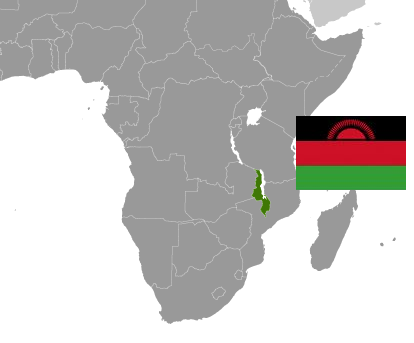 Malawi to move from coupon to biometric system in fertiliser subsidy (Nyasa Times)
...[I]n the next agricultural season, government will introduce a finger print system that will only give opportunity to the targeted beneficiary to access the cheap farm inputs.
How to fool a finger vein sensor
Swiss researchers found a way to spoof finger veins (idiap)
It's pretty convoluted and involves some feedback from the sensor that would likely be unavailable in a real-world deployment, but it worked.
See video:
It's pretty convoluted and involves some feedback from the sensor that would likely be unavailable in a real-world deployment, but it worked.
See video:
Tuesday, May 20, 2014
We've been hearing about this for a while — Samsung eyes iris-scanning security for future phones
And on a completely unrelated matter... Deloitte Survey Shows Security Concerns Loom Large as the Biggest Barrier for Mobile Financial Services
And on a completely unrelated matter... Deloitte Survey Shows Security Concerns Loom Large as the Biggest Barrier for Mobile Financial Services
Tuesday, May 13, 2014
They did it
The State of Florida has banned biometrics in schools — biometric systems intended to help schools function better in delivering the services they are tasked with providing.
It'll be fun to see if someone decides to sue when a school tries to sell yearbooks this year. After all, if using a secure biometric system to help a school lunch line move faster is wrong, how can schools be allowed to sell a facial recognition database of the school's students?
On a side note, the big annual biometrics conference is in Tampa, Florida again this year.
Monday, May 12, 2014
Never a good headline
We’re Not In Crisis –NHIA (Peace FM)
It's not surprising that countries like Ghana are choosing to leap-frog the 20th century systems other large health care providers use, but it also isn't surprising that the process is difficult and requires a steady managerial hand.
In January this year, the NHIA introduced the ‘instant issuance’ of health insurance Identification (ID) Card system based on biometric data.There's a reason national health services worldwide are scrambling to apply biometric ID management techniques to service delivery. Biometrics deliver bottom-line financial benefit to health care systems in significant ways. Better ID means less fraud, fewer ghost patients and a better audit trail if a provider's activities warrant investigation. Also, better patient ID leads to better patient outcomes and better records management.
The process began as a roll-out in the Greater Accra region after a pilot of it on the security personnel (Military and police) in two districts of the Region-Ayawaso and La.
Currently, the process has been extended to the Central and Eastern Regions respectively and the Ashanti Region will be the next to join instant issuance of the ID cards regime.
It's not surprising that countries like Ghana are choosing to leap-frog the 20th century systems other large health care providers use, but it also isn't surprising that the process is difficult and requires a steady managerial hand.
Wednesday, May 7, 2014
Since we haven't mentioned it in a while: Biometrics can be a potent anti-corruption tool
Royal Bank of India sets aside decision for mandatory biometric authentication in PoS terminals — "In the testing phase, biometric authentication took up to 30 seconds even on 3G connections" Ouch!
PHILIPPINES: No biometrics, no voting in 2016
Royal Bank of India sets aside decision for mandatory biometric authentication in PoS terminals — "In the testing phase, biometric authentication took up to 30 seconds even on 3G connections" Ouch!
PHILIPPINES: No biometrics, no voting in 2016
US Government online fingerprint ID system to be tested in Michigan & Pennsylvania
Government to Test ‘Identity Ecosystem’ in Two States (The Blaze)
The first round of tests are aimed at finding an efficient and secure two-step verification for accessing public programs, like government assistance. The White House believes this ID system will reduce fraud and overhead, by eliminating duplicated ID efforts across multiple agencies.The Blaze article is quite negative on the whole project but it contains a lot of links to other sources of information. It's worth a read.
Thursday, May 1, 2014
A closer look at the Fast Identity Online Alliance
If you haven't heard of FIDO yet, you should really click through to the entire article.
Password-free authentication: Figuring out FIDO (Search Security)
Password-free authentication: Figuring out FIDO (Search Security)
Online authentication mechanisms have grown increasingly difficult for IT security teams as employees and customers expect to access online services and e-commerce sites from a myriad of devices. With password fatigue reaching new heights, many security professionals want stronger authentication methods that eliminate the complexities and risks associated with the integration of online credentials and identity management.
By now, most security professionals have heard about the Fast Identity Online (FIDO) Alliance, a non-profit founded in July 2012 and publicly announced in February 2013. The industry group is championing better multifactor authentication and open standards to promote interoperability of next-generation authentication technologies.
More on African leap-frogging with biometrics
Using biometrics to secure African identities (HumanIPO)
African nation states are leaping the technology divide with the rapid deployment of electronic identification systems to register their entire populations. The possession of a bonafide identity document is foundational to the creation of civil society. It enables citizens to exercise fully their rights as members of society: their right to vote in an electoral system that is fraud and error free; provide access to health insurance coverage, apart from other valuable legal documents, and lastly restore the bond of trust between these citizens and their governments.
Subscribe to:
Posts (Atom)

