For Florida State Rep. Jake Raburn (R – Valrico) one of the bill’s sponsors, it’s a privacy issue. “No one, including the federal government, should be allowed access to our students’ personally identifiable information,” Raburn said. “This legislation will protect this sensitive information and prevent its misuse.”
The Pinellas County school district, near Tampa, uses palm scanners to move kids through lunch lines. Barbara Dalesandro, a food service technology coordinator for the district, tried to convince lawmakers to reject the legislation.
“When we had cards and PIN numbers, there was constant fraud. Other students always drained the accounts. There was a significant loss of revenue in that regard,” Dalesandro said. “We’ve been using palm scanning for four years with no problems from our parents.” - See more at: http://secureidnews.com/news-item/shedding-light-on-floridas-biometric-ban/#sthash.EBTXaPnZ.dpuf

Showing posts with label Florida. Show all posts
Showing posts with label Florida. Show all posts
Wednesday, October 1, 2014
Exorcising the biometric bogeyman
Shedding light on Florida’s biometric ban (Secure ID News)

Tuesday, May 13, 2014
They did it
The State of Florida has banned biometrics in schools — biometric systems intended to help schools function better in delivering the services they are tasked with providing.
It'll be fun to see if someone decides to sue when a school tries to sell yearbooks this year. After all, if using a secure biometric system to help a school lunch line move faster is wrong, how can schools be allowed to sell a facial recognition database of the school's students?
On a side note, the big annual biometrics conference is in Tampa, Florida again this year.
It'll be fun to see if someone decides to sue when a school tries to sell yearbooks this year. After all, if using a secure biometric system to help a school lunch line move faster is wrong, how can schools be allowed to sell a facial recognition database of the school's students?
On a side note, the big annual biometrics conference is in Tampa, Florida again this year.
Monday, March 10, 2014
Secure Identity & Biometrics Association weighs in in Florida bill
Florida schools would benefit with biometric ID (Orlando Sentinel)
The Florida Senate's Criminal Justice Committee's 5-1 vote last month to ban biometrics in all schools lacks common sense and denies schools the opportunity to improve safety, standards and fiscal accountability. What is so unfortunate about the Senate vote is that it is based on misunderstood science and two districts out of 67 counties that failed to follow simple program protocols, now threatening to deny sensible biometric program implementation in places like Miami-Dade.As we've said before, if schools can't be trusted with sensitive information, biometrics aren't the biggest cause for concern.
Tuesday, February 18, 2014
Florida moves to ban school biometrics
 |
| This is a biometric database |
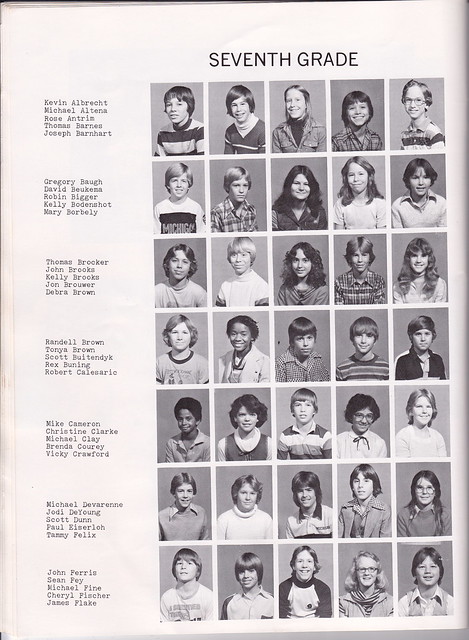
A key Senate committee voted to stop public school systems from collecting "biometric" data on students, despite warnings that unplugging the computerized systems will waste money and make it harder to move hundreds of kids through lunchroom lines.I haven't read the bill but school yearbook companies, school ID card suppliers, and school photographers might want to make a few calls to the 850 area code. Photos of faces are biometrics, after all.
"These are children," said Sen. Dorothy Hukill, R-Port Orange. "There is no reason to scan a kid. Just because the government can do this is no reason the government should be doing this."
More posts on biometrics in schools.
Outright technology bans are easy to understand, but they often have unintended consequences and seldom benefit large organizations. It's better to develop a solid understanding of the appropriate use of a given technology and how it furthers an organization's mission.
Tuesday, February 4, 2014
But isn't the school yearbook a biometric database?
FLORIDA: Lawmakers to consider banning biometrics in schools (Miami Herald)
One proposal requires that those proposing biometric solutions (1) explain the type of information being collected, how it is collected and stored, and the purposes for which the information is being used; (2) require written permission before collection; (3) ensure that the information is used only for identification or fraud prevention purposes; (4) ensure that the information is not disclosed to another governmental entity or a third party without written permission; (5) provide for the protection from unauthorized disclosure; and (6) require the encryption of all biometric information.
The other is written so broadly that it could apply to school yearbooks and photo ID's.
It isn't clear which one the legislative committee voted on today.
“We’ve been able to get kids through a lunch line for decades,” said state Sen. Dorothy Hukill, a Port Orange Republican who brought the idea to the Florida Senate. “Why do we need to take their biometric information when we know there is the potential for identity theft?”IT-Lex has a more useful elucidation of what's going on in Florida Bills Target The Use Of Biometrics In Schools.
But the idea may meet resistance from local school boards, some of which want the flexibility to create their own policies.
“Biometrics is coming,” said Miami-Dade School Board member Raquel Regalado, who spearheaded an effort to create a local biometrics policy this month. “It exists in the market. It will exist in our schools. It may end up being a viable way to ensure there isn’t fraud.”
One proposal requires that those proposing biometric solutions (1) explain the type of information being collected, how it is collected and stored, and the purposes for which the information is being used; (2) require written permission before collection; (3) ensure that the information is used only for identification or fraud prevention purposes; (4) ensure that the information is not disclosed to another governmental entity or a third party without written permission; (5) provide for the protection from unauthorized disclosure; and (6) require the encryption of all biometric information.
The other is written so broadly that it could apply to school yearbooks and photo ID's.
It isn't clear which one the legislative committee voted on today.
Thursday, November 15, 2012
Disney biometrics: Going back to Cali? I don't think so.
Disney [Kinda] Puts Its Foot Down on Ticket Renting (COASTER-net)
OK, I'll save you the Google search. Here it is...
Disney began cracking down when they realized that the businesses were offering these multi-day discounts for less than $100 a day when the going rate for both parks is $125 for a single-day ticket.
...
Walt Disney parks in Florida and other parks such as SeaWorld and Busch Gardens theme parks use a biometric finger scanning system for their multi-day pass system. However, according to Disney in California a similar system will not be used at the Disneyland Resort theme parks.
OK, I'll save you the Google search. Here it is...
Tuesday, February 7, 2012
The Economics and Politics of Biometric Time and Attendance in State Bureaucracies
All over the democratic world, elected officials are feeling the pressure from the electorate to cut costs while continuing to deliver high-quality services. Translating that pressure first into action, then into bottom-line results isn't easy, though.
Public and private sector organizations are adopting new identity management technologies that offer a significant return on investment (ROI). This story gives a detailed account of some of the issues and managerial challenges surrounding public sector adoption of cost-cutting technology.
Budget Chairman Wishes Prisons Kept Better Tabs (TheLedger.com)
Public and private sector organizations are adopting new identity management technologies that offer a significant return on investment (ROI). This story gives a detailed account of some of the issues and managerial challenges surrounding public sector adoption of cost-cutting technology.
Budget Chairman Wishes Prisons Kept Better Tabs (TheLedger.com)
From time to time some state agency, or some person at an agency, doesn't seem to take seriously what someone in the Legislature, maybe a chairman of a committee, wants the agency to do.Some of the best reporting on biometrics and ID management issues is to be found in small local media outlets. This piece from the News Service of Florida and found at the Polk County Ledger is a great example. It's worth reading in its entirety.
Agency officials blow off the concerns of some committee chairmen at their peril...
The fight goes back to a little-noticed requirement buried seemingly innocuously in the budget lawmakers passed in 2010.
"From the funds provided in specific appropriations 629 through 721, the Department of Corrections by January 1, 2011 shall implement an electronic time and attendance system in all four regions through a contract ….," the budget said.
January 1, 2011, came and went, with no such contract.
Wednesday, February 1, 2012
Mobile Biometrics ID Man Wanted for Child Molestation
Port St. Lucie fingerprint reader nabs child molest suspect (CBS 12)
The arresting officer deserves a special note of gratitude. The nature of the alleged crime is horrible in the extreme.
On January 26, at approximately 9:00 p.m., an officer was conducting a traffic stop on a suspicious vehicle in a “hotspot” (area known for a high concentration of auto and residential burglaries). During the stop, the suspect had no identification and the name provided indicated no wants or warrants, yet the officer was suspect of the name given.
When the backup officer arrived on scene, the officer took the suspect's fingerprint using the Fingerprint Reader and within 30 seconds, the suspect was positively identified as Carlos Rodrigues and had an active warrant out of Rochester, New York for sodemy on a child under 12.
Subscribe to:
Posts (Atom)

