Wednesday, July 9, 2014

NFC + Mobile + Biometrics = The Future of Payments

British Banking Association reports on UK’s banking ‘revolution’ (NFC World)
“The revolution in the way we spend, move and manage our money is not over,” the report says. “Banks are looking at a range of new technologies to make banking even easier and more flexible. Biometric data could make accounts safer and security features more straight forward for legitimate transactions.

“Near field technology could end the need for taking your card out of your wallet or purse to make a purchase. Banks will strive to innovate because they know it’s a way to win new customers.”
The combination of mobile handheld device hardware (i.e. the perfect token), biometric ID verification, and NFC provides the tools for building extremely powerful ID management regimes.

Banks appear to be realizing that systems like these could make for happier customers and pose a real threat to the credit card/debit card/clearing house/merchant bank model of card-based payments provided by organizations such as Visa and Mastercard.

It's possible that banks that successfully negotiate this opportunity could begin to take back some of the 3% of credit card transaction value (a massive amount of money) collected by credit card companies, but in order to do that banks will have to figure out how to make an extremely secure mobile app that that lives on a device that has a massive attack surface.

Elsewhere in the news, Norwegian start-up Zwipe is trying to solve this riddle with dedicated hardware. As compared to networked mobile devices such as smartphones, the Zwipe device has a tiny attack surface in that users can't download viruses to it via cellular signals, wifi or SMS. But in the name of security, the Zwipe device lacks some of the connectivity attributes that make smart devices so attractive for true e-commerce transactions rather than "point-of-sale only" transactions.

No matter how all this shakes out, this is a trillion dollar riddle and biometrics are a near certainty to factor in the solution.

Tuesday, July 8, 2014

This should surprise no one

Facebook base may be better than the FBI facial recognition base — They've had more people feeding it better information with fewer legal barriers.

Monday, July 7, 2014

Large customers need biometrics to be more convenient

Fingerprints still too unreliable for banks (MIS - Asia)
Still, organisations across multiple sectors are exploring the use of several types of biometric technologies. The Australian Passport Office last November issued a tender for new biometrics technologies.

The organisation has been using facial recognition for its passport production process since 2005.

In 2012, ANZ Bank said it was exploring using fingerprint recognition technology to replace traditional PIN codes.

Parker said there an interesting discussion under way now about how secure a transaction has to be and how much organisations and consumers are you willing to pay for a certain level of security.

"If you're protecting the front door or the control panel of a nuclear arsenal, you probably want to spend a lot of money on security to make sure it's top grade and nobody can get through it.
It looks like people are starting to come to grips with the "compared to what?" and "perfect vs. good" arguments we've been making here for a while now.

We'd also suggest a revised headline for the article linked above: "Fingerprints not Convenient Enough for Large Customers." We'd agree with that one.

As it stands now, biometrics algorithm developers and large system vendors aren't really finding much success at supporting customers for whom ID management isn't their primary business. And nearly all organizations for whom ID management is their primary business are government entities. This goes some distance toward explaining why the private market for biometrics has been slow to develop.

It's also the challenge we have built SecurLinx to meet. In this example, banks aren't in the ID business; they're in the money business, but they do have to get ID right — or at least predictably wrong — in order to do their job. Magnetic stripes, sixteen digit numbers and passwords aren't great, but they are predictable. They are convenient at an affordable cost.

Biometrics companies must deliver solutions to customers that can add security and at least come close to the convenience of the systems they seek to replace.

Will future life insurance underwriters use face scanning technology?

Not really biometrics but...

Can your face reveal how long you’ll live? New technology may provide the answer. (Washington Post)
Imagine that an insurance underwriter comes to your house and, along with noting your weight and blood pressure, snaps a photo of your face. And that those wrinkles, mottled spots and saggy parts, when fed into a computer, could estimate how long you will live.

Facial recognition technology, long used to search for criminals and to guess how a missing child might look as an adult, may soon become personal. A group of scientists is working on a system that would analyze an individual’s prospects based on how his or her face has aged.

From a Times of India blog...

Don’t junk Aadhaar: It will help NDA government achieve its goals
Prime Minister Narendra Modi has struck the right note by stepping in quickly to clear the confusion on Aadhaar cards and asking to scale up enrollments to 100 crore people over a short period. This will help the government accelerate direct benefit transfers to the poor, reduce leakages and bring down the fiscal deficit.

It looks like India's new government is giving UID some room to run. 100 crore is a billion people.


See also:
Aadhaar, DBT get a lifeline, Modi to retain, push UPA schemes
Putting to rest speculation about the fate of the UPA government’s flagship Aadhaar project and the Direct Benefits Transfer scheme, Prime Minister Narendra Modi on Saturday sought a 100-crore enrolment target under Aadhaar at the “earliest”, also asking officials to look into linking passports with its data.
This is big news indeed.

Thursday, July 3, 2014

India: Latest in NPR v UID

Tug of war over Aadhaar slowing its progress (Hindustan Times)
Three NDA ministries are trying to pull the UPA’s signature project, Aadhaar, in different directions, threatening to further slow down the plan to give all residents a unique identity number (UID).


We discussed the root philosophical differences inherent in the two ID systems here in How Much Fraud is Acceptable in NPR, UID where we observed that:
Bringing full citizenship rights to poor, illiterate landless Indians brings with it a near-certainty that full citizenship rights will be conferred upon some number of poor, illiterate, landless non-Indians living in India.
If you're interested, I'd encourage you to read the whole thing.

Also, the India, UID and NPR labels in the footer of this post call up a lot of in-depth analysis of what's going on with the most ambitious ID project ever conceived.

Big news from Australia

Everyone entering Australia to have biometric data scanned (Australia Forum)
A $700 million update to Australia’s border management system will mean that everyone entering the country will have their data scanned and matched against a biometrics database.
Australia is well suited to give this a good chance of working. You can't drive there, or walk there, and their stringent agricultural controls and efforts to keep rabies out means that they're already used to being pretty careful at points of entry.

Monday, June 16, 2014

Is an Expanded Biometric Immigration System Worth $7 Billion?

The U.S. checks fingerprints for people entering the country. What about when they leave? (The Atlantic)
The advantage of biometrics would be more accurate matches and less fraud. Spelling blunders, multiple identities, and other data errors all make biographic data more susceptible to error, according to the report. For example, recently it was discovered that Boston Marathon bomber Tamerlan Tsarnaev’s name was misspelled on a manifest list for a flight to Russia, resulting in the FBI missing a lead while investigating his terrorist ties.

France: Banking group looks toward multifactor authentication

France's national interbank network, Groupement des Cartes Bancaires CB, is currently evaluating the use of biometry in payment transactions (TMCnet)
The first CB approval will involve the association of biometry and a chip integrated into a keyfob. Integration of the chip into a micro-SD card of a mobile phone is also being studied. Highly convenient, the user keeps the keyfob or telephone on his or her person, for example in a pocket or handbag, without needing to present it physically to pay or withdraw cash.

Monday, June 9, 2014

India's UID project is reeling

Aadhaar enrolment procedure suffers setback, agencies halt the process (Economic Times)

It appears that the entities that collect enrollments and then charge the government for them are uniting to resist requirements that they do their job better. It's also worth recalling that some of these agencies have behaved quite badly and at least one has been willing to create enrollments for vegetables, so standards could probably be higher.
N.S.A. Collecting Millions of Faces From Web Images (New York Times)


Kyrgyz government examines Mongolia’s experience on collection of biometric data — Mongolia is issuing biometric "chip-on-card" ID's


Apparently, the biometrics industry isn't immune to software patent disputes

Friday, June 6, 2014

HUNGARY: Budapest airport begins biometric checks — Matching live scan with fingerprint stored on passport chip


PAKISTAN: Election Commission has announced electronic voting machines for next general elections in 2018 — Biometrics are mentioned but the modality isn't specified.


CANADA: Police charge three with trying to bribe Indian officials to secure a $100 million contract for a biometric security system — Biometrics can be a great corruption-fighting tool but they're hard to apply to the procurement process itself.

Wednesday, June 4, 2014

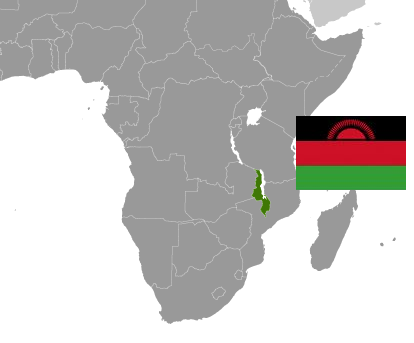
Using biometrics to prevent fraud in assistance to Malawian farmers

Malawi to move from coupon to biometric system in fertiliser subsidy (Nyasa Times)
...[I]n the next agricultural season, government will introduce a finger print system that will only give opportunity to the targeted beneficiary to access the cheap farm inputs.

How to fool a finger vein sensor

Swiss researchers found a way to spoof finger veins (idiap)
It's pretty convoluted and involves some feedback from the sensor that would likely be unavailable in a real-world deployment, but it worked.

See video:
 

Tuesday, May 20, 2014

Tuesday, May 13, 2014

They did it

The State of Florida has banned biometrics in schools — biometric systems intended to help schools function better in delivering the services they are tasked with providing.

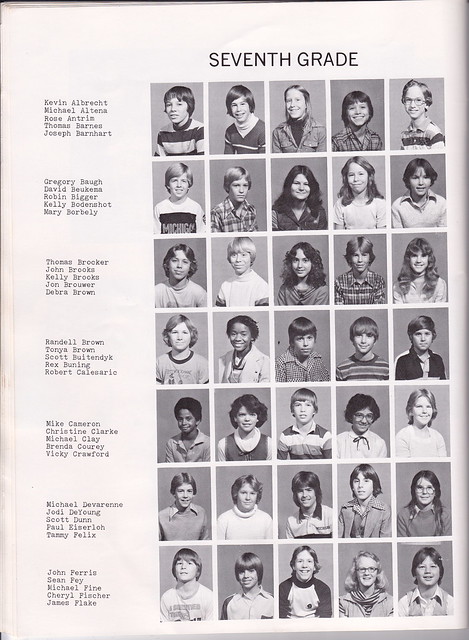
It'll be fun to see if someone decides to sue when a school tries to sell yearbooks this year. After all, if using a secure biometric system to help a school lunch line move faster is wrong, how can schools be allowed to sell a facial recognition database of the school's students?

On a side note, the big annual biometrics conference is in Tampa, Florida again this year.

Monday, May 12, 2014

Never a good headline

We’re Not In Crisis –NHIA (Peace FM)
In January this year, the NHIA introduced the ‘instant issuance’ of health insurance Identification (ID) Card system based on biometric data.

The process began as a roll-out in the Greater Accra region after a pilot of it on the security personnel (Military and police) in two districts of the Region-Ayawaso and La.

Currently, the process has been extended to the Central and Eastern Regions respectively and the Ashanti Region will be the next to join instant issuance of the ID cards regime.
There's a reason national health services worldwide are scrambling to apply biometric ID management techniques to service delivery. Biometrics deliver bottom-line financial benefit to health care systems in significant ways. Better ID means less fraud, fewer ghost patients and a better audit trail if a provider's activities warrant investigation. Also, better patient ID leads to better patient outcomes and better records management.

It's not surprising that countries like Ghana are choosing to leap-frog the 20th century systems other large health care providers use, but it also isn't surprising that the process is difficult and requires a steady managerial hand.

Wednesday, May 7, 2014

Since we haven't mentioned it in a while: Biometrics can be a potent anti-corruption tool


Royal Bank of India sets aside decision for mandatory biometric authentication in PoS terminals — "In the testing phase, biometric authentication took up to 30 seconds even on 3G connections" Ouch!


PHILIPPINES: No biometrics, no voting in 2016

US Government online fingerprint ID system to be tested in Michigan & Pennsylvania

Government to Test ‘Identity Ecosystem’ in Two States (The Blaze)
The first round of tests are aimed at finding an efficient and secure two-step verification for accessing public programs, like government assistance. The White House believes this ID system will reduce fraud and overhead, by eliminating duplicated ID efforts across multiple agencies.
The Blaze article is quite negative on the whole project but it contains a lot of links to other sources of information. It's worth a read.

Thursday, May 1, 2014

A closer look at the Fast Identity Online Alliance

If you haven't heard of FIDO yet, you should really click through to the entire article.

Password-free authentication: Figuring out FIDO (Search Security)
Online authentication mechanisms have grown increasingly difficult for IT security teams as employees and customers expect to access online services and e-commerce sites from a myriad of devices. With password fatigue reaching new heights, many security professionals want stronger authentication methods that eliminate the complexities and risks associated with the integration of online credentials and identity management.

By now, most security professionals have heard about the Fast Identity Online (FIDO) Alliance, a non-profit founded in July 2012 and publicly announced in February 2013. The industry group is championing better multifactor authentication and open standards to promote interoperability of next-generation authentication technologies.

More on African leap-frogging with biometrics

Using biometrics to secure African identities (HumanIPO)
African nation states are leaping the technology divide with the rapid deployment of electronic identification systems to register their entire populations. The possession of a bonafide identity document is foundational to the creation of civil society. It enables citizens to exercise fully their rights as members of society: their right to vote in an electoral system that is fraud and error free; provide access to health insurance coverage, apart from other valuable legal documents, and lastly restore the bond of trust between these citizens and their governments.

Wednesday, April 30, 2014

LastPass Adds Galaxy S5 Fingerprint Scanner Support — This is the kind of stuff Apple won't be doing any time soon.

Monday, April 28, 2014

Facial recognition technology is still in its infancy (CSO) — As the article spends a fair amount of time on, there's a significant difference in system performance with cooperative vs. non-cooperative users.


Private sector biometric time-and-attendance systems are gaining steam (Channel News Asia) — "...institutions including banks, schools and polyclinics have also expressed interest in such systems, adding that demand has increased by 30 per cent annually for the past three years."


DHS testing biometric exit devices at mock airport this summer (Fierce Homeland Security) — The law requiring the DHS to implement such a system is a lot older than the DHS is.

Friday, April 25, 2014

Praise for Ann Cavoukian, Privacy Commissioner of Ontario

Canada's Global Player in the Privacy Debate (Governing.com)
To Cavoukian, the notion that personal privacy is sacrificed for the greater good -- from health reporting to communications tracking -- is the lazy way out. She has developed what she calls Privacy by Design, the idea that personal privacy protections and new technology advancements can actually live in harmony. “Why do we have to look at it as one interest versus another?” she asks. “I always call it the power of ‘and.’ Get rid of the word ‘versus;’ substitute the word ‘and.’ I want privacy and security.”
We have also had good things to say about Ms. Cavoukian in the past.

We're all ears

New academic research on ear biometrics...

3D Ear Identification Based on Sparse Representation (Forensic Magazine)
Compared with classical biometric identifiers such as fingerprint and face, the ear is relatively a new member in the biometrics family and has recently received some significant attention due to its non-intrusiveness and ease of data collection. As a biometric identifier, the ear is appealing and has some desirable properties such as universality, uniqueness and permanence. The ear has a rich structure and a distinct shape which remains unchanged from 8 to 70 years of age as determined by Iannarelli in a study of 10,000 ears. The recognition using 2D ear images has a comparable discriminative power compared with the recognition using 2D face images.
If you click through to the whole study at plos.org, the authors (Lin Zhang, Zhixuan Ding, Hongyu Li & Ying Shen) have made the Matlab source code for the ear matching algorithm available. That's really neat.

From our first post on ear biometrics in 2010...
Pros:
-Facial recognition accuracy is degraded as the pose angle diverges from a full frontal view. As pose angles get bigger, an ear will come into view. Tying an ear-recognition system to a face recognition system could make more identifications possible, especially with a non-participating subject.

Cons:
-Ears aren't really that stable. They grow throughout life, as the quote above addresses.
-As high school wrestlers can attest, ears are easily deformed by trauma.
-Hair obscures significant portions of the ear in a significant percentage of the population.

Washington DC: Participate in biometric system testing and earn $95

Seeking individuals to participate in an ID verification research study. (Upper Marlboro Patch)
Participants will be asked to pass through a simulated identification area that uses safe, commercially available sensors like high definition cameras. The simulated screening area will also test the usefulness of safe biometric scanners that are currently being used by other countries at border crossings such as fingerprint identification.

Video of gait analysis in action

This Security Solution Says It Can Figure Out If You Are Safe Or Dangerous By Scanning Your Skeleton (Business Insider - Australia)
They’re using a standard 2D surveillance camera to analyse a person’s motions and create a “skeletal map,” which shows the distance between joints and how they move. By comparing this map with future scans, Extreme Reality can detect any differences in movements that might indicate signs of stress and red flags. The system uses complex algorithms to detect these differences, and according to Extreme Reality, it is more than 90% accurate.

See for yourself...


Thursday, April 24, 2014

This kind of thing makes fingerprint spoofing even harder

Samsung patent suggests multi-fingerprint e-wallet authentication and gesture control (Android Authority)
Applications for fingerprint scanning are quite limited at the moment...

The future may hold a bigger promise, however. A patent application made by Samsung indicates that the company may be working on an even more innovative use of fingerprint scanning for authentication. In the patent application, Samsung describes several methods for authenticating a purchase, such as through PIN, password, pattern, and even fingerprint scans. An interesting addition is the inclusion of multiple fingers for stronger authentication.
Uncertainty over which fingerprint was used — or in the not too distant future, which combination of fingerprints are used — would go a long way towards making the already difficult task of fingerprint spoofing even harder.

Wednesday, April 23, 2014

Monday, April 21, 2014

Cross Match Acquires DigitalPersona (findBIOMETRICS)
“Cross Match is strong in multimodal biometric technologies and government solutions. DigitalPersona is strong in identity verification and the commercial sector, especially finance, retail and healthcare. So, the fit is highly complementary.”

Friday, April 18, 2014

Veins are great, but that doesn't mean fingerprints are a "gimmick"

Vein-scanning technology may trump fingerprint scanning for payments (Sydney Morning Herald)  But even if the headline is true, it doesn't follow that
"Using our fingerprint is not a secure way to do [authentication]," Professor Susilo said. "It's just like a gimmick."

One of the main benefits of vein and iris scanning is that you don't tend to leave behind iris or vein prints, he said.

As most vein scanner sensors coming out this year require no physical contact, it means there are no residual biometric patterns that could be copied, preventing fraudulent use.

Fingerprints are notoriously easy to lift from surfaces and are not secure, he said, which has been demonstrated by researchers for more than a decade.

In 2002, Japanese researchers showed that fingerprint scanners could be fooled with about $10 worth of household supplies. They also found many fingerprint systems did not detect if someone was "live and well".
Vein scanners are, in fact "more secure" in the sense that there is no latency. You can't leave vein prints behind. But that doesn't mean that fingerprints are a gimmick.

To take the professor in his own terms, how much money worth of household supplies are required to access an unsecured mobile device? How much money worth of household supplies are required to access a device secured by a password? How easy is it to apply the $10 worth of household supplies to cracking the phone? The answers: None, None, Not very. It really isn't that easy to spoof fingerprints without the participation of the person whose fingerprint is enrolled.

Vascular biometrics, on the other hand, have no latency. Nobody leaves behind vein prints. But hardware cost (too expensive) and form factor (too large) disqualify vein sensors' use in mass market mobile devices*. Until about 6 months ago this was true even for fingerprint readers.


*In mobile devices, power consumption is also a big concern. I don't really know if vein readers are power hogs or not. Perhaps the likely infrequency of vein sensor use compared to the screen or audio output means power requirements won't end up being the determining factor for vein reader deployment anyway.

Thursday, April 17, 2014

Newsweek not big fans of facial recognition


Biometric Surveillance Means Someone Is Always Watching (Newsweek) — It's a little hard to tell whether Newsweek is more angry about the "who" or "how."

Wednesday, April 16, 2014

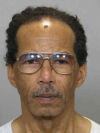
Facial recognition ID's another 40-year fugitive

Suspected NC fugitive from 1970s arrested in Iowa (LaCrosse Tribune)
According to authorities, the man they believe is Carnes moved to Waterloo from Washington state in the summer of 2013. Where he lived before that is a mystery.
Carnes

On July 12, he used the name William Henry Cox to obtain a vehicle title. Then on March 11, he used the identity of Louie Vance to apply for an Iowa driver’s license.

Investigators became suspicious when the Iowa Department of Transportation’s biometric facial recognition program sent up red flags about his driver’s license. The system records the distances between facial features and stores them on a computerized database to compare with measurements on other photos in the system.
See also from March 15...
A promising data point for the durability of facial recognition biometrics
Samsung Galaxy S5 Fingerprint Sensor Security Already Hacked And Compromised (Hot Hardware) — Our perspective on this sort of thing hasn't changed since we wrote this heavily linked post in response to the same demonstration on Apple hardware a few months back.

Long story short: It's not that easy to do, and convenient fingerprint security is way better than not doing anything at all, which is what many of us are doing now.

Tuesday, April 15, 2014

UNITED STATES: Feds Begin Fingerprinting 'High Risk' Medicare Providers and Suppliers (Weekly Standard)

Kenya seeks biometric citizen register

KENYA: State to register all citizens in digital database
The Government will register all Kenyans in a national digital database as a measure of addressing security challenges and arrest cases of fake identification documents. Deputy President William Ruto said the move will see a consolidation of all current registers of persons and development of a common database, which will bear biometric details of all those registered.

This will help the Government to address security issues and enhance planning. The database will contain biometric details of all persons, land, establishments and assets. The registration will start in three months. The database will capture new births registration.
There are some interesting details in the story and some important details are missing. We'll just have to wait and see.

Data privacy in schools is about much more than biometrics

As we've often said before, if schools can't be trusted with private information, biometrics aren't the problem. It's nice to see that education professionals take a broad view of student privacy issues.

State Lawmakers Ramp Up Attention to Data Privacy (Education Week)
As the appetite for educational data on students has grown across the K-12 sector, so has the stated desire among many state lawmakers to try to protect the privacy and security of sensitive student information.

Spurred by concerns that the rise of education technology and the increasing prevalence of new assessments will place student data in unreliable hands or be put to nefarious uses, lawmakers in dozens of states have acted this year to clarify who has what access to student data and to specify the best practices for shielding that data.
Biometrics gets an undue amount of attention where child privacy issues are concerned and they are mentioned quite a few times in the article. The article, however, is written for the education insider so it is missing the "passion" one often finds in the techy press and political news stories.

A gimlet eye on the FBI's face recognition database

The Electronic Frontier Foundation's FOIA request/lawsuit for FBI records about its facial recognition efforts has borne fruit, as we thought it might.

FBI Plans to Have 52 Million Photos in its NGI Face Recognition Database by Next Year (EFF)
The records we received show that the face recognition component of NGI may include as many as 52 million face images by 2015. By 2012, NGI already contained 13.6 million images representing between 7 and 8 million individuals, and by the middle of 2013, the size of the database increased to 16 million images. The new records reveal that the database will be capable of processing 55,000 direct photo enrollments daily and of conducting tens of thousands of searches every day.
Read the whole thing. There's a lot there.

Two of the most interesting revelations come under the headings: NGI Will Include Non-Criminal as well as Criminal Photos, and, Many States Are Already Participating in NGI.

Friday, April 11, 2014

Samsung and biometrics extends PayPal's point-of-sale reach

PayPal launches Galaxy S5 fingerprint-based payments in 25 countries (Android Authority)
Customers can use their finger to pay with PayPal from their new Samsung Galaxy S5 because the FIDO Ready software on the device securely communicates between the fingerprint sensor on their device and PayPal’s service in the cloud. The only information the device shares with PayPal is a unique encrypted key that allows PayPal to verify the identity of the customer without having to store any biometric information on PayPal’s servers”

Walking the walk in the Philippines

Shoe leather and high tech (WalkahWalkah.org)
Beginning the 6th of May 2014, the spokesman of the Commission on Elections James Jimenez and a committed group of Walkahs will walk in the footsteps of the umalohokan, starting from Laoag City and ending in the City of Manila. Along the way, he will be engaging local communities to bring them news about events and decrees that will impact one of their most precious rights: suffrage.
The web site for the effort is very well done and earnestly reflects the importance of proper elections. We wish the Walkahs the best.

You can also follow them on Titter @Walkah_Walkah

Biometrics market forecast to 2020

Biometrics market will be worth $23.54 billion by 2020 at an estimated CAGR of 17.6% (Markets and Markets)
Biometrics provides a high degree of security and convenience which ensures confidentiality of personal information. This is superior to traditional passwords/PINs as these are easily guessed, forgotten, or copied; tokens can be stolen or misplaced. Biometric technology helps in preventing theft as the information is stored in the form of a digital record in the database which makes it highly impossible to reconstruct, decrypt, or manipulate. Biometric uses biological characteristics or features which are inseparable from a person, thus, reducing the threat of loss or theft.
Next Generation Biometric Market
Source: Markets and Markets

Monday, April 7, 2014

UK: Brighton clubs install scanners to catch underage drinkers after police sting — Similar deployments have been tried in Australia, India, and Scotland.


Where's the Danger in “Scanning Kids?” (Source Security) — Because if schools can't be trusted with private information, biometrics aren't the problem.

Wednesday, April 2, 2014

Emirates: Police car uses seven live cameras to identify people via facial recognition software (Gulf News)


MarketsandMarkets: Global market for image recognition technology to grow from $9.65 billion in 2014 to $25.65 billion by 2019 at a Compound Annual Growth Rate (CAGR) of 21.6% from 2014 to 2019.

Tuesday, April 1, 2014

The Search for the Perfect Biometric Is Over. The next big thing in biometrics is your wrinkly elbow.

Elbow scan
Forget digital fingerprints, iris recognition and voice identification, the next big thing in biometrics is your wrinkly elbow. Just as a fingerprints and other body parts are unique to us as individuals and so can be used to prove who we are, so too are our elbows. Computer scientist Eric Praline of the University of Housinge, has now demonstrated how an elbow wrinkle scan could be used to identify us for a range of cutting-edge applications.

The approach is based on infra-red scanners located in chair or automobile armrests and could be used to quickly register and identify people in a moving car as they approach passport control or in airport lounges for instance or as they sit in their offices to begin their day's work.

Praline has tested the approach and achieved accuracy of around 97 percent, this coupled with other factors such as having the correct heart rate, sitting in the right chair or tied to other biometrics such as the topography of your rear-end and earwax analysis could be used to prevent deception and fraud. Rubber fingers can be used to dupe fingerprint systems. Documents can be forged. "But most people walk around with their elbows covered most of the time so the odds of elbow spoofing are quite low," says Praline.

When asked how this new modality might stand up against the relentless health-and-beauty industry assault on wrinkly elbows, Praline remained confident that elbows are the "killer app" biometrics have been waiting for. "While various creams, ointments and unguents exist to ameliorate the effects of aging upon the skin of the human elbow, those treatments only serve to reduce the prominence of the elbow wrinkles, not to eliminate them altogether. Sit tight. The days of ubiquitous elbow scanners are closer than many are prepared to admit."

Monday, March 31, 2014

United States may introduce DNA as part of security clearance background check

Feds mull DNA testing for security clearances (Politico)
The Federal Register explains the motive for the potential inclusion of DNA checks here [pdf]:
Given the increasing use of DNA (deoxyribonucleic acid) as an investigatory tool by federal, state, and local law enforcement agencies, the DoD should consider requiring applicants to provide a DNA sample. That provided DNA sample would be profiled and compared to available databases. This would help insure that no applicant for a clearance is a subject of an active federal, state, or local criminal investigation based on DNA evidence.

Tuesday, March 25, 2014

Indian Supreme Court issues two-pronged UID decision

It's been a while since we've dealt with the topic of India's UID project here. This post picks up with current events. Newer readers can catch up by sifting back through the India label (also located in the post footer).


Nandan Nilekani: Supreme Court decision on Aadhaar vindicates our stand Nandan Nilekani (Economic Times)
Earlier this month, UIDAI approached the Apex Court, challenging a Bombay High Court order which had ordered the Agency to share biometric data to help solve an ongoing criminal investigation.


But it's hard to see how this part of the Supreme Court decision isn't a set-back.

SC: Withdraw Orders Making Aadhaar Must for any Service (Indian Express)
In a clear direction that a person’s information is private and cannot be misused, the Supreme Court on Monday directed the Centre to withdraw immediately the instruction, if any, issued by it for making Aadhaar card mandatory for citizens to avail of government services...
If UID is going to bring the power of biometrics to radically curtail the use of ghost recipients of direct transfers, making it mandatory could certainly help. Then again, there are other incentives that can be brought to bear. Most people would rather get a subsidy for propane directly deposited into a bank account rather than wait in line at a government store.

Also, putting a legal wall between the welfare system and criminal justice system should increase participation.

Biometric Australian Parole Officers?

In 2014, Queensland Corrective Services (QCS) will be deploying the Argus’ Biometric Offender Reporting Information System (B.O.R.I.S) across all community monitoring offices and selected Police stations. (Biometrics Institute)

See also: Biometric British Parole Officers?


Neither deployment replaces human judgement of how to deal with criminal justice issues, rather they attempt to reduce the bureaucratic burdens on professional staff of ID verification.

Monday, March 24, 2014

Friday, March 21, 2014

KENYA: The biometric election flop was bureaucratic, not technological as this article would have you believe. You didn't need a fortune-teller to see it coming, either. We covered the whole sad story here.


Trusted digital identities and secure eServices to deliver 50bn in cost savings by 2020 (Secure Identity Alliance)


Saudi Arabia seeks to become GCC biometrics hub (Arab News)


Mobile biometrics market forecast: 156.9 percent compound annual growth rate through 2018 (FierceMobileIT)


Biometrics uncover ghost refugees (Townhall) — "At camps in Burkina Faso, the initial registration completed in May 2012 suggested that 107,000 Malians had fled an offensive that year by Islamist rebels and their Tuareg separatist allies. However, this month's final registration phase, including finger printing and biometric operations like iris scans, came up with only 34,000, according to UNHCR data."

Reducing fraud like this increases confidence among donors that their efforts are worthwhile.

Wednesday, March 19, 2014

Educating the supply side and the demand side of voter fraud in the Solomon Islands (Solomon Star News) — What gets through enrollment will most likely get caught in de-duplication.


Going up? The overall smart elevators market is expected to reach $16.45 billion by 2018 — It's about time elevators got biometrified.


Security has layers. Top Security Techniques That Work For The Masters (Blog Her) — "Every layer of protection the bank adds is designed to make it harder for a criminal to ge paid. Consider a layered approach for your small-business security plan."

Monday, March 17, 2014

Health Care seems to have every single identity management challenge there is. — Biometric technology has a major role to play in healthcare: here’s why (memeburn)

Saturday, March 15, 2014

A promising data point for the durability of facial recognition biometrics

Facial recognition helped the US Marshals Service to identify a military fugitive who escaped federal prison in 1977 (Fox News)

As far as biometric modalities go, the durability of facial recognition has been the easiest to test. Scientists have had access photos of known individuals taken over long periods of time stretching back to the days of Abraham Lincoln.

Still, this real world example illustrates that facial recognition biometrics are useful even over very long time periods even without frequent database updates.

Friday, March 14, 2014

It's official

Nandan Nilekani resigns as UIDAI chief (Economic Times) — "I am resigning as of today," Nandan said in an email reply to ET, adding "the government will decide who will hold the position next".

Wednesday, March 12, 2014

Aadhaar 'beats' WhatsApp — "WhatsApp gained 450 million users in five years, but Aadhaar got 600 million 'users' in just 4.5 years."

Tuesday, March 11, 2014

Monday, March 10, 2014

Missing Malaysia Airlines jet leads experts to focus in ID documents — Australian security expert Carl Ungerer says passport failure a massive concern (The Guardian - Australia)

Secure Identity & Biometrics Association weighs in in Florida bill

Florida schools would benefit with biometric ID (Orlando Sentinel)
The Florida Senate's Criminal Justice Committee's 5-1 vote last month to ban biometrics in all schools lacks common sense and denies schools the opportunity to improve safety, standards and fiscal accountability. What is so unfortunate about the Senate vote is that it is based on misunderstood science and two districts out of 67 counties that failed to follow simple program protocols, now threatening to deny sensible biometric program implementation in places like Miami-Dade.
As we've said before, if schools can't be trusted with sensitive information, biometrics aren't the biggest cause for concern.

Friday, March 7, 2014

'Cause it's Friday... [Update: Hoax alert]

UPDATE:
The LIVR Hoax: Everybody's Favorite New Drunkbro App Is Fake (Gizmodo)

April Fool's Day keeps getting earlier and earlier.


What if your social network would ONLY let you post when drunk? (Irish Independent)
Thanks to the help of a mini-breathalyser that plugs in to your smartphone, Livr (it rhymes with ‘river’, yes, like the organ) will only be accessible if users’ blood alcohol content scores above a certain, as-yet-undetermined level.

Once users have made their way past this “biometric bouncer” they’ll get access to a number of features designed especially for those who have had - in the words of founders Kyle Addison and Avery Platz - “a couple of drinks.”
This is both fun and horrifying, but I can see how it might be socially beneficial.

Boss: I saw your off-color comments about the management culture around here.
Staffer: Oh, that doesn't really count, it was on Livr.
Boss: OK, then.

But just to set the record straight blood alcohol level, except in a few very rare circumstances, isn't really a biometric in the way we frequently use the term.

See: Biometrics vs. Biostatistics.

Short version:
Biometrics for identity management concern facts about the physical human body that don't change (or don't change much) over time.
Biostatistics, on the other hand, are useful precisely because they change, sometimes radically over short or long time-frames.


Wednesday, March 5, 2014

Era of biometrics begins (The Korea Herald)


UID enrollment continues apace

Little signs of let-up in rush for unique Aadhaar ID (The Hindu)
Over a month after the Centre put on hold its ambitious scheme of transferring cooking gas subsidy to the bank account of the household, something for which it had made Aadhaar number a pre-requisite, there are little signs of any let-up in the rush in the State for getting the unique identity number.

“People continue to come [to get Aadhaar] like before,” says M.R.V.Krishna Rao, Joint Director of Census Operations & Controlling Officer, Directorate of Census Operations here.

Monday, March 3, 2014

The AP explains smartphone fingerprint biometrics

It's not bulletproof security, but it's more secure than existing methods, he says. Despite the risks, Bennett says he sees potential. — "If it results in more people locking their phone," he says, "it improves security."

There’s a fine-line between harvesting personal data to assist or to exploit

How To Collect Consumers' Data Without Freaking Them Out (Fast Company) — Five tips for brand leaders to consider when harvesting personal data so consumers feel okay about giving it up.
Biometrics necessary in the secure 21st century workplace (Mass Live)
With major defense, technology and financial services industries, Massachusetts has lots of secrets to keep. The state led the country in technology licenses in 2012. Between 2008 and 2012, patents granted to Massachusetts companies and individuals rose 37 percent — a rate second only to California.

As criminal enterprises become more technologically sophisticated, so must corporate security measures. Increasingly, companies are turning to biometrics — facial and voice recognition, iris scans, finger and palm prints. The days of the photo ID name badge are gone.

Friday, February 28, 2014

Private sector facial recognition gaining acceptance?

Face-recognition system unlocks doors at Manhattan complex (Fox - New York)
A camera takes 5 pictures of each resident's face. One is selected then it and other info about the resident are stored in the system database. Once a tenant tries to get through their building's security door, a high-tech scanner reads their face. If the system recognizes the face, the door is unlocked in a matter of seconds.
This story is much more about public acceptance of facial recognition than face-rec technology. The technology for this sort of application had been around for years.

Falling prices might have something to do with it as well. Either way, it's good to see facial recognition getting some traction in the private market. A positive return on investment for these deployments depends on public acceptance and increasing security without sacrificing convenience or vice versa.

Tuesday, February 25, 2014

More Brazilian rubber-fingered ghosts

This time it's the port of Paranaguá (Portuguese - Folha de S. Paulo)
A Federal Police (PF) operation Monday at the port of Paranaguá found "silicone fingers" that were used by employees to forge their attendance and receive credit for days not worked.

The 25 "fingers" were tailor-made, reproducing the fingers of 14 employees. They were stored in desks at the port, labeled with the name of each worker. Even a tray (ed. mold?) was found.

Each of the workers have worked there for at least eight years, according to PF.

Federal Police are investigating whether there are other people involved in the fraud.*
According to their site, the port at Paranaguá is the largest bulk port in latin America.
Paranaguá port                                                                                                                 ©Digital Globe & Microsoft Corporation


See Brazilian ghost doctors have rubber fingers for a more in-depth analysis of why forcing time-and-attendance fraud into the realm of rubber fingers is actually a good thing.

Long story short, every person who participated in creating a facsimile of their fingerprint has also had to create a lot of evidence that they participated in a conspiracy to defraud their employer.

The fraud kit in this most recent case can be seen at the Folha link.


*Translation from Google & Bing translation services with an assist by me. For now, robots still have a hard time with Brazilian Portuguese. I sympathize.

Monday, February 24, 2014

It's official: GALAXY S5 has a fingerprint reader

Spain, February 24, 2014 - Samsung Electronics today announced the fifth generation of the Galaxy S series, the Galaxy S5, designed for what matters most to consumers. The new Galaxy S5 offers consumers a refined experience with innovation of essential features for day-to-day use.

Essential device protection
The Galaxy S5 is IP67 dust and water resistant. It also offers a Finger Scanner, providing a secure, biometric screen locking feature and a seamless and safe mobile payment experience to consumers. The Ultra Power Saving Mode turns the display to black and white, and shuts down all unnecessary features to minimize the battery consumption.

The device will be available globally through Samsung’s retail channels, e-commerce and carriers on April.

More information is available at the Samsung site here.

See also this video.

The fingerprint scanner comes in for a couple of mentions in the first half.

See also:

Friday, February 21, 2014

Nilekani out at UIDAI

Aadhaar loses its unique identity, Nandan Nilekani to quit (Financial Express)
ique Identification Authority of India (UIDAI) chairman Nandan Nilekani on Friday said he would resign from his job by March end to join mainstream politics and contest the Lok Sabha election on a Congress ticket, causing many to wonder if his absence at the helm would derail the Aadhaar project, vital for slashing India’s subsidy expenditure and increasing the efficacy of welfare programmes.
Also from the Financial Express...

Editorial: End of Aadhaar?

See also this post from September 2011 for some background on Nandan Nilekani and the UID project: India: Is UID Under Siege?. At the time, we said...
Nandan Nilekani is the animating spirit of the UID project. He knows technology through education and experience among the founding generation of Unisys. He knows management, evidenced by his rise to become CEO of that firm. He knows India (inasmuch as India is "knowable"), having attended Indian schools at every level of his education and having lived in several places there. And he knows government through his service on various committees and advisory groups. He is, perhaps, the only person capable of pulling this off.
Hopefully, as he has indicated elsewhere, the UID project no longer requires Nandan Nilekani to sustain it.

Thursday, February 20, 2014

Schools, technology, and privacy

Scrutiny in California for Software in Schools (NY Times)
A leading California lawmaker plans to introduce state legislation on Thursday that would shore up privacy and security protections for the personal information of students in elementary through high school, a move that could alter business practices across the nearly $8 billion education technology software industry.

The bill would prohibit education-related websites, online services and mobile apps for kindergartners through 12th graders from compiling, using or sharing the personal information of those students in California for any reason other than what the school intended or for product maintenance.
This strikes me as a much better approach to technology in schools than what Florida state Senate is contemplating.

As we've mentioned before, the issue of privacy in schools is very much bigger than biometrics. Schools also keep academic records, behavioral records, medical records, socio-economic assessments for administering school lunch programs, home address information, counseling notes and a ton of other information that is much more sensitive than a fingerprint template consisting of a string text characters that cannot be used to learn anything about a student. If schools are unable to keep data secure, biometric template information is the last thing that should concern parents.

Too often, news accounts use biometrics as the ultimate example of private information and the hook on which to hang all sorts of fears the reader is supposed to imagine — i.e. part of the problem — when they are actually part of the solution. Because biometrics are far superior to usernames and passwords for securing personal information, why isn't all electronic access to student information should be controlled biometrically?

More mobile fingerprint talk

Apple's Competitors Are Preparing Their Next iPhone Killers (The Motley Fool)

Tuesday, February 18, 2014

Florida moves to ban school biometrics

This is a biometric database
Senate panel votes to ban biometric data collection in schools (Florida Current)
A key Senate committee voted to stop public school systems from collecting "biometric" data on students, despite warnings that unplugging the computerized systems will waste money and make it harder to move hundreds of kids through lunchroom lines.

"These are children," said Sen. Dorothy Hukill, R-Port Orange. "There is no reason to scan a kid. Just because the government can do this is no reason the government should be doing this."
I haven't read the bill but school yearbook companies, school ID card suppliers, and school photographers might want to make a few calls to the 850 area code. Photos of faces are biometrics, after all.

More posts on biometrics in schools.

Outright technology bans are easy to understand, but they often have unintended consequences and seldom benefit large organizations. It's better to develop a solid understanding of the appropriate use of a given technology and how it furthers an organization's mission.

All is proceeding as we have foreseen

Windows Phone 8.1 with fingerprint support, UI customizations — A new WP 8.1 SDK leak points to fingerprint scanner support in the next OS update, which should put Windows Phone level with iOS and Android. (GSM Arena)


Samsung’s next flagship phone will feature a swipe fingerprint scanner embedded in the home button (uSwitch)


April 22, 2014: LG G3 specs leak points to integrated fingerprint scanner (Trusted Reviews)

The prediction to which this post's title refers can be found here.

Friday, February 14, 2014

BRAZIL: Biometrics market forecast estimates a CAGR of 30.8% through 2019
The market for these technologies in Brazil is altogether projected to reach $998.3 Mn in 2019 from $260.3 Mn in 2014 at an estimated compounded annual growth rate of 30.8%. Fingerprint technology by far projected to represent the largest segment with share followed by face recognition, hand geometry, iris, voice, and signature in 2014.

Wednesday, February 12, 2014

Market forecasts: India & SE Asia/ANZ

India to grow at a CAGR of 44.22 percent over the period 2013-2018 (Report Linker)

South East Asia and ANZ is forecast to grow at a CAGR of 15.82 percent over the period 2013-2018 (Companies and Markets)

Faster, please: International travel interoperability

Orlando International Airport (MCO) launches biometric kiosks for passengers arriving from visa waiver countries (Airport World)

I believe earlier versions of this technology were only for Americans returning to the US, or for a subset of countries negotiated on a country-by-country basis.

Leap-frogging in Nigeria

Here's another example of biometrics being used to leap-frog the technologies and methods other countries have used in the past to build an ID infrastructure. Even if the Nigerian government had the resources to attempt a paper-heavy, labor-intensive duplication of the systems some countries built in the early twentieth century, it isn't at all clear that it could produce a better outcome than cheaper biometrics.

NIGERIA: Banks to Start Biometric Customer Registration on Friday (Daily Times)
"There will be teething problems, but we will learn from it. The biometric initiative is being pursued by the Bankers' Committee," the Access Bank boss said.

The Director, Corporate Communications Department, CBN, Mr. Ugochukwu Okoroafor, said the biometric system, when fully operational, would help to improve credit in the economy and boost the nation's macro- economy.

Okoroafor said, "Nigeria runs on cash; there is no identity. We don't know who is who. We are now going into identity confirmation. We can now create a credit system that will power our economy.

"Banks don't want to lend because of identity issue. We want to move Nigeria from cash system to credit system that has identity."

Thursday, February 6, 2014

Passwords can be tricky on mobile devices

30% of organisations to use biometric security on mobile devices by 2016 (Telecoms.com)
Almost a third of businesses plan to use biometric authentication for mobile devices as part of their bring your own device (BYOD) programmes by 2016, according to research firm Gartner.

The analyst firm explained that BYOD programmes have caused potential security problems for IT directors within enterprises and data that is protected by complex passwords and security measures on employees’ PCs is not guarded as well on their mobile devices. As a result, Gartner expects that 30 per cent of organisations will implement biometric authentication on employees’ mobile devices, up from five per cent today.
I came across an interesting problem the other day. I had to change an important password to access certain critical work functions. Being a conscientious type, I use good password hygeine: mixed case, numbers and punctuation with the help of a random password generator. So far so good.

When I generate the password, I don't really care what it is or notice the characters. I copy and paste it into the web page asking for it. So far, so good. But one of the things controlled by the password I recently had to change is my ability to check email on my phone. No problem, I find the password (let's say it was 5=EtH!duWaz8) and I couldn't find an equal sign in any of my phone's keyboard layers to save my life.

My work-around involved emailing it to another email account I can get on my phone and doing a copy-paste job. Menial tasks should be easy, they shouldn't require as much creativity to accomplish.

Mobile biometrics can help.

I wonder what the sensor looks like

Body odor passes smell test as biometric (ZD Net) — Researchers at the Polytechnic University of Madrid are exploring a new form of biometric authentication - body odor.

See also: The challenges confronting any new biometric modality
I suspect that any definable aspect of the human anatomy could be used as a biometric identifier — in instances where teeth are all that is known about an individual, they are used for high confidence identification — I'm afraid that, for the foreseeable future, the cards are stacked against any new biometric modality catching on in any big way.

The reasons for this are both scientific (research based) and economic (market based).

On the science side, a good biometric modality must be: unique, durable, and easily measurable. If any of these are missing, widespread use for ID management isn't in the cards. If something is unique and durable but isn't easily measurable, it can still be useful but it isn't going to become ubiquitous in automated (or semi-automated) technology. Teeth and DNA fit this model. Teeth have been used to determine the identity of dead bodies with a high degree of certainty for a long time, but we aren't going to be biting any sensors to get into our computers any time soon — or ever. Likewise with DNA.

There is also the challenge of proving that a modality is in fact unique, durable and easily measurable which requires a whole lot of experimental data and (especially regarding uniqueness) a healthy dose of statistical analysis.
more at the link

Tuesday, February 4, 2014

But isn't the school yearbook a biometric database?

FLORIDA: Lawmakers to consider banning biometrics in schools (Miami Herald)
“We’ve been able to get kids through a lunch line for decades,” said state Sen. Dorothy Hukill, a Port Orange Republican who brought the idea to the Florida Senate. “Why do we need to take their biometric information when we know there is the potential for identity theft?”

But the idea may meet resistance from local school boards, some of which want the flexibility to create their own policies.

“Biometrics is coming,” said Miami-Dade School Board member Raquel Regalado, who spearheaded an effort to create a local biometrics policy this month. “It exists in the market. It will exist in our schools. It may end up being a viable way to ensure there isn’t fraud.”
IT-Lex has a more useful elucidation of what's going on in Florida Bills Target The Use Of Biometrics In Schools.

One proposal requires that those proposing biometric solutions (1) explain the type of information being collected, how it is collected and stored, and the purposes for which the information is being used; (2) require written permission before collection; (3) ensure that the information is used only for identification or fraud prevention purposes; (4) ensure that the information is not disclosed to another governmental entity or a third party without written permission; (5) provide for the protection from unauthorized disclosure; and (6) require the encryption of all biometric information.

The other is written so broadly that it could apply to school yearbooks and photo ID's.

It isn't clear which one the legislative committee voted on today.

Thursday, January 30, 2014

India: UIDAI & NPR still at it

This is a "dog bites man" story but it has been a while since we dropped in on the India ID effort...

Govt likely to allow UIDAI to start enrolment in NPR states (CNBC India)
Government is likely to allow on Thursday UIDAI, which issues unique identification numbers to residents, to start enrolments in areas other than 18 states and union territories allocated to it for the purpose.

According to an official source, the Cabinet Committee on Unique identification Authority of India (UIDAI) will discuss a proposal of the Planning Commission to allow UIDAI to start enrolments in states and union territories which were not part of its mandated operations.
UIDAI proposal not taken up by Cabinet due to paucity of time (Business Standard)
A Cabinet Committee could not discuss today the proposal to allow UIDAI to start enrolments in areas other than 18 states and union territories allocated to it, due to paucity of time.

According to an official source, the Cabinet Committee on Unique identification Authority of India (UIDAI) meeting scheduled for today to discuss the proposal was not held as the meeting of the Cabinet took time to decide on LPG cylinder issue and other matters.

Both the committees are headed by Prime Minister Manmohan Singh.
For some background on the UIDAI-NPR bad blood, see ID Rivalry Reignites in India.

Target hack investigation looks at vendor ID credentials

Target: Cybercrooks used stolen vendor ID to hack into system (Star Tribune)
Target Corp. said Wednesday that the huge data breach it suffered late last year happened after an intruder stole a vendor’s credentials and used them to gain access to the company’s computer system.

A Target spokeswoman wouldn’t identify the vendor or type of credentials because the retailer is in the midst of forensic and criminal investigations into the malware attack, where cybercrooks hijacked debit and credit card information from up to 110 million people.

Wednesday, January 22, 2014

I guess it's a start

"password" is no longer the most popular password on the internet.

  The 25 most common passwords of 2013 (CBS News)
According to password management company SplashData, the top three passwords of the year are “123456,” “password” and “12345678.” The top three passwords haven't changed, but "123456" and "password" swapped places from last year. The company's list of the "25 worst passwords of the year" was compiled using data that hackers have posted online, which are said to be stolen passwords.

Tuesday, January 21, 2014

Bold statement

Apple’s purchase of AuthenTec was the largest acquisition in its history. (Wired)


Biometrics for government accoutability

Fingerprinting to end honeymoon for govt staff (Arab News)
Government employees may soon have to mark their attendance through biometrics, which may rob them of the luxury of coming late or even bunking work.

The proposal to have biometric attendance marking in all public departments was mooted by several monitoring agencies including the National Anti-Corruption Commission (Nazaha). The move is aimed at ensuring strict and timely attendance of government employees in various sectors.

The findBIOMETRICS 2013 Year in Review is out

Biometrics Makes Headlines – The findBIOMETRICS 2013 Year in Review (findBIOMETRICS)

From Peter O’Neill's introduction:
What a year for the Biometrics and Identification Industry! The past year in biometrics was explosive. Biometrics has become real. From the rapid growth of the FIDO Alliance to the Consumer Electronics Show that hailed in 2014, biometrics are being talked about everywhere! Industry verticals like Border Control, Financial, Healthcare, Law Enforcement, National ID, etc. are all moving aggressively ahead into 2014. Our industry made headlines in 2013 and will continue to do so in 2014, so …be prepared…be innovative …be ready to capitalize on a rapidly growing marketplace.

We received responses from Canada, Spain, Russia, China, Ireland, Mexico, Brazil, Hong Kong, Sweden, Germany, UK, France, Korea, The Netherlands, Taiwan, Lithuania, Singapore, Japan, Italy, Malaysia and the USA.
Here's a link straight to the 33-page PDF report.

Research points to growth in government biometrics market and future M&A

Govt biometrics market to hit US$6.9bn (Security Document World)
SDI says: “Government identity and border control initiatives, increasing concerns about data security, and an increase in rebel groups and terrorism are expected to boost the demand for biometric identity and security systems over the coming years. As this sector gains prominence, it is expected that large competitors will try to generate competence by acquiring medium and small sized niche firms which will fill the gaps in their products or services portfolio.”

Monday, January 20, 2014

New book on how biometrics age

Book Review: Age Factors in Biometric Processing (M2SYS Blog)
Mr. Fairhurst assembles his book into four primary sections:

1.) An introduction to the aging process and an overview of biometric systems – setting the stage for discussion on how aging can effect individual biometric modalities
2.) A study of how aging effects specific biometric modalities including physiological and behavioral modalities
3.) A closer look at the topic of aging from the perspective of an industrial viewpoint, a forensics perspective, and the impact of aging on one of the more popular biometric modalities – facial recognition
4.) A look to the future and based on the conclusions of this book, what type and the scope of research that may be needed in the future

Samsung to introduce mobile fingerprint tech

Samsung bets on fingerprint tech for Galaxy S5 (The Korea Herald)
After California-based Apple spearheaded fingerprint sensors last year, Samsung Electronics, the world’s largest smartphone maker, is poised to feature the sensors in its upcoming smartphone, the Galaxy S5.
Iris will have to wait.

Thursday, December 5, 2013

New Canadian biometrics requirement for certain visa types begins next Wednesday

Canada introduces new biometric visa requirements (Dhaka Tribune)
When a traveller arrives in Canada at a port of entry, a Canadian border services officer will use all available sources of information to confirm that person’s identity.

This new requirement will not only help protect the safety and security of Canadians while helping facilitate legitimate travel, it will also protect prospective visitors by making it more difficult for others to forge, steal or use an applicant’s identity to gain access to Canada, it said.

Innovations in Biometrics for Consumer Electronics

Frost & Sullivan: Integration of Biometrics in Consumer Electronics a Fast-Emerging Trend (Yahoo)
[...]fingerprint recognition will remain the leading biometric technology used in consumer electronics due to its convenience, cost-efficiency and quick ROI. Iris recognition and multimodal biometrics will rapidly grow in the next three years due to their accuracy, although the high cost and large size of iris recognition systems may hinder widespread uptake. Voice and face recognition technologies likewise should find higher usage depending on the security requirement of the application.
More good insight at the link.

Droid users must wait for fingerprint unlock option

Will Samsung’s Galaxy S5 Come with TouchID Rival for Easy Log-In? (GottaBeMobile)
Samsung is reportedly chasing Apple’s iPhone 5s’ TouchID biometric authentication sensor with its own version, which is said to debut in 2014.